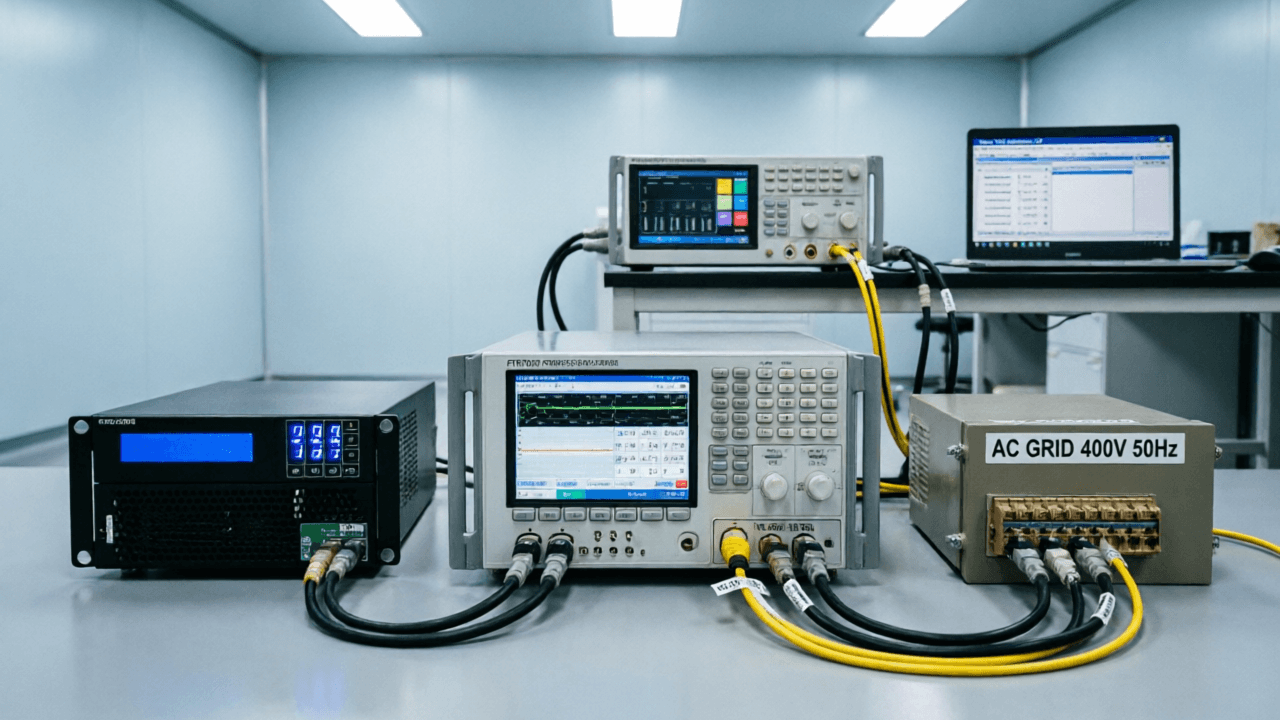

The Signal Integrity Imperative in Analog Validation
Analog circuit validation—especially for operational amplifiers, precision sensors, and high-resolution data converters—demands power sources that do not compromise measurement fidelity. Even microvolt-level noise or nanosecond-scale transient droop can mask critical performance boundaries, distort small-signal behavior, or trigger false fault detection during characterization. Switching bench supplies, while efficient and compact, generate high-frequency switching artifacts (typically 50 kHz–2 MHz), output ripple harmonics, and ground-loop coupling that directly contaminate sensitive analog nodes. In contrast, linear DC power supplies eliminate switching-related interference by design—operating with continuous conduction and inherently smoother regulation.
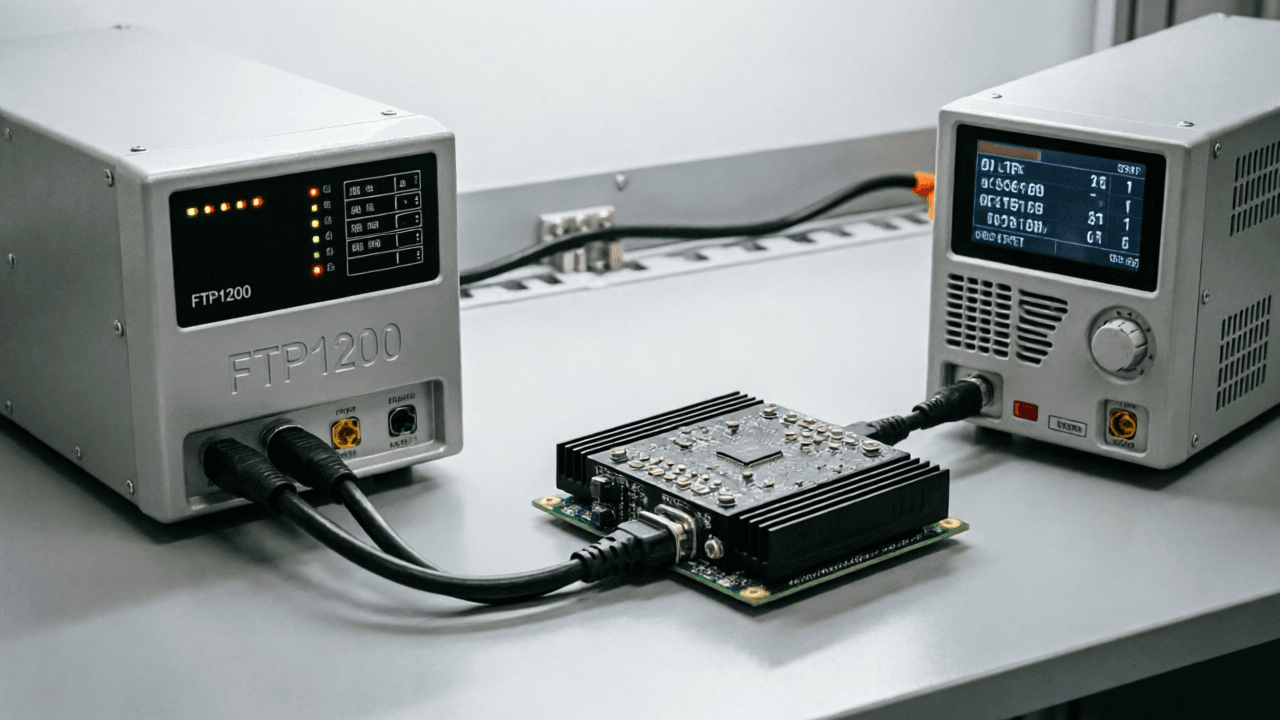
The FTL series multi-channel programmable linear DC power supply was engineered specifically for these demanding applications. Its fully linear architecture ensures clean, stable, and artifact-free voltage rails—critical when validating sub-microvolt offset drift in instrumentation amplifiers or measuring picoampere-level bias currents in photodiode interfaces.
Ultra-Low Noise & Fast Transient Response: Enabling True Analog Fidelity
Noise performance defines the lower limit of measurable signal integrity. The FTL series achieves <350 µVrms output noise across its full load range—a benchmark unattainable by most switching supplies, which typically specify 1–10 mVrms (and often much higher at high frequencies). This spec is not averaged or filtered; it reflects broadband noise measured from 10 Hz to 1 MHz, directly relevant to audio-grade op-amps, MEMS sensor front-ends, and low-noise LDO validation.
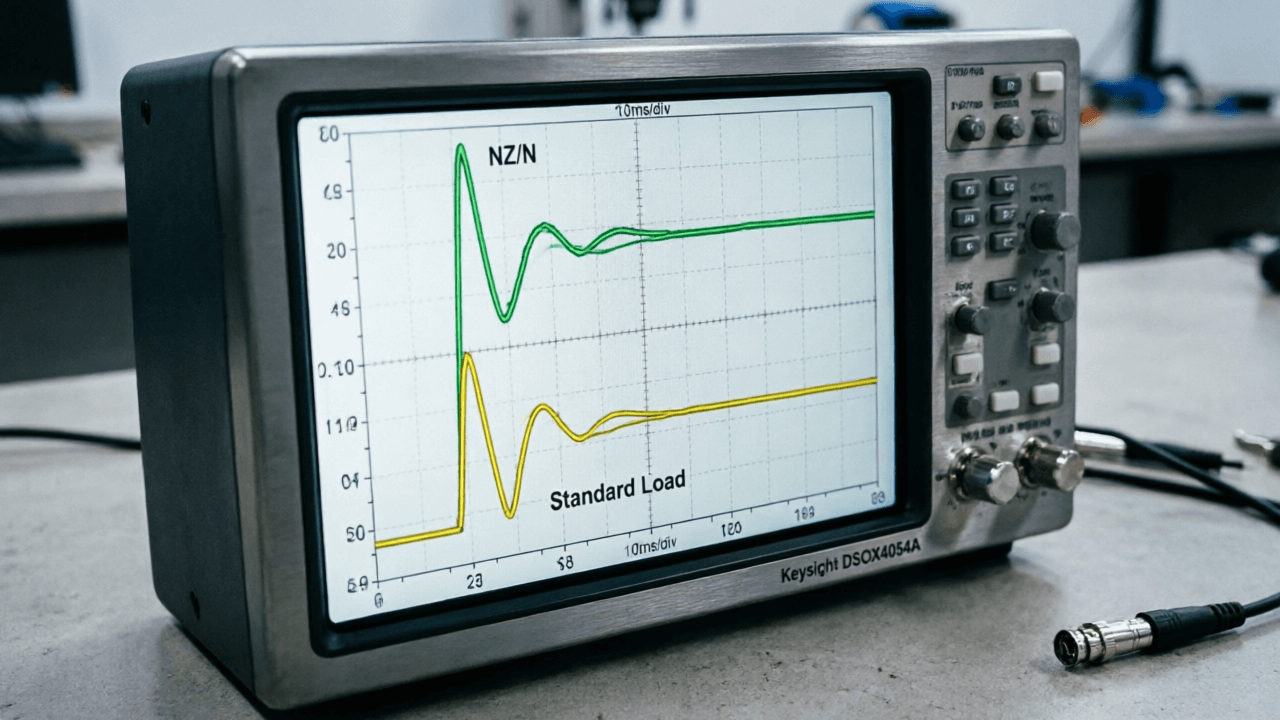
Equally vital is transient response. When an analog IC undergoes rapid load changes—such as during rail-to-rail output slewing or dynamic bias adjustment—the power supply must recover within microseconds to avoid sag-induced distortion or instability. The FTL series delivers <50 µs recovery time (to 10 mV band) under 50% load step changes, thanks to optimized error amplifier bandwidth and low-ESR bulk capacitance. This speed prevents undershoot from triggering comparator false triggers or distorting settling-time measurements in precision ADC reference buffers.
Channel Isolation: Eliminating Cross-Talk in Multi-Rail Analog Systems
Modern analog designs routinely require independent, tightly regulated rails: ±15 V for op-amps, +5 V for logic interfaces, +3.3 V for digital cores, and dedicated low-noise +2.5 V references—all operating simultaneously. Switching supplies often share common magnetics and control loops, leading to inter-channel coupling through shared input filters, ground planes, or feedback paths. Even minor cross-talk (e.g., 10–50 mV ripple coupling) can modulate reference voltages or inject asymmetry into differential stages.
The FTL series provides true galvanic isolation between channels—each with its own transformer, rectifier, linear regulator, and independent ground reference. No shared switching elements, no coupled inductors, no shared control ICs. This architecture guarantees that transient events on Channel 1 (e.g., a sudden 2 A load step) produce zero measurable perturbation on Channel 2’s output—verified down to 1 µV resolution. For dual-supply op-amp testing, isolated sensor excitation + signal conditioning rails, or split-rail DAC validation, this isolation is non-negotiable.
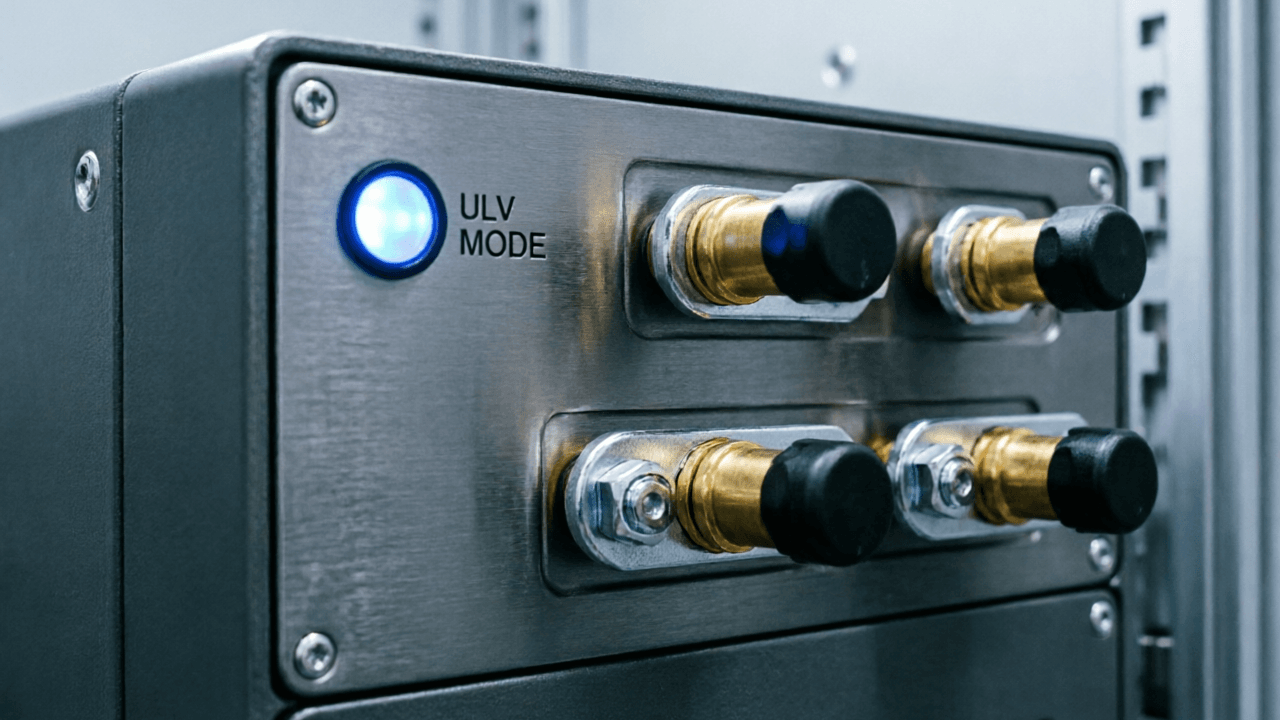
This capability supports complex validation workflows—from routine testing and maintenance of the production line workbench to laboratory research and integrated testing of automated equipment—as noted in the official application scope for the FTL series multi-channel programmable linear DC power supply.
Application-Specific Advantages for Precision Analog Workflows
In op-amp validation, supply rail noise directly impacts PSRR verification, open-loop gain accuracy, and harmonic distortion (THD+N) measurements. With the FTL series, engineers measure true device performance—not power supply artifacts. Similarly, for resistive or capacitive sensor interfaces (e.g., strain gauges or humidity sensors), supply ripple couples into bridge outputs, inflating effective noise floor and reducing dynamic range. The FTL’s <350 µVrms noise enables reliable SNR characterization at 24-bit resolution.
Precision analog ICs—including voltage references, current sources, and programmable gain amplifiers—require stable, quiet, and independently controlled rails during parametric testing. The FTL series’ multi-channel flexibility allows simultaneous sourcing of main supply, reference bias, and test stimulus—all without channel interaction. Its programmability supports automated test sequences, while its linear topology preserves signal chain integrity from source to DUT.
Whether deployed in electronic maintenance, university research labs, or high-reliability industrial validation environments, the FTL series meets the uncompromising demands of analog-centric engineering—where every microvolt and nanosecond matters. For teams committed to measurement truth over convenience, linear power delivery remains the only path to trustworthy analog validation.