

Introduction to Regenerative Grid Simulation
Modern electrical and electronic systems increasingly interact with complex power grids. Devices such as renewable energy inverters, electric vehicle charging systems, and advanced motor drives do not merely consume power; they actively feed power back into the grid. To ensure reliability and compliance, engineers must test these devices under realistic grid conditions. This is where a bidirectional AC power supply becomes essential. Unlike traditional unidirectional sources, a bidirectional unit can both source and sink AC power, accurately simulating the dynamic behavior of a regenerative grid.
The FTPS Series Programmable Bidirectional AC power supply Regenerative grid simulator is specifically designed to meet these rigorous testing demands. It provides a long-term stable AC power supply while allowing seamless transitions between sourcing and sinking power. This guide outlines how to set up the FTPS Series for simulating regenerative grid environments across three critical industries: home appliances, communication electronics, and aerospace avionics.
Setting Up the FTPS Series for Home Appliance Durability
Home appliances, particularly those with inverter-driven compressors or motor drives, can generate regenerative energy during deceleration or braking cycles. Testing the durability of these appliances requires a power source that can absorb this returned energy without tripping or voltage spikes.
To set up the FTPS Series for home appliance durability experiments:
- Connection: Connect the appliance under test to the AC output terminals of the bidirectional AC power supply. Ensure the chassis and safety grounds are properly connected.
- Mode Selection: Configure the FTPS unit to operate in AC mode. Set the voltage and frequency to match the appliance's rated operational parameters (e.g., 230V, 50Hz).
- Regenerative Sinking: Enable the regenerative sinking capability. When the appliance's motor decelerates and feeds power back, the FTPS Series will absorb the energy and dissipate it safely or route it back to the facility grid, maintaining a stable bus voltage.
- Profile Programming: Program load profiles that simulate real-world appliance usage cycles (e.g., spin cycles in washing machines or compressor startups in refrigerators) to conduct long-term durability experiments.
Configuring for Communication Electronics Aging
In the communication field, power supplies and electronic products must undergo rigorous aging tests to ensure long-term reliability. Aging rooms require a power source that can provide continuous, stable AC power over extended periods while handling the dynamic loads of communication infrastructure.
When deploying the FTPS Series in communication electronics aging and testing:
- Stable Output Configuration: Set the bidirectional AC power supply to deliver a continuous, clean sine wave output. Communication equipment is highly sensitive to voltage distortion, making the low-output distortion of the FTPS Series critical.
- Aging Room Integration: In aging room environments, multiple devices are often tested simultaneously. The FTPS Series can be integrated to supply stable AC power to the entire room, handling the aggregate load.
- Bidirectional Handling: Some communication power supply units (rectifiers) convert AC to DC and may have backup battery systems that can back-feed. The FTPS Series can safely sink this regenerative current during testing or fault simulations, ensuring the aging process is not interrupted.
- Automation Integration: Utilize the automated test system compatibility of the FTPS Series. Interface with standard communication protocols to monitor and log power data throughout the aging cycle.
Aerospace and Avionics Product Testing
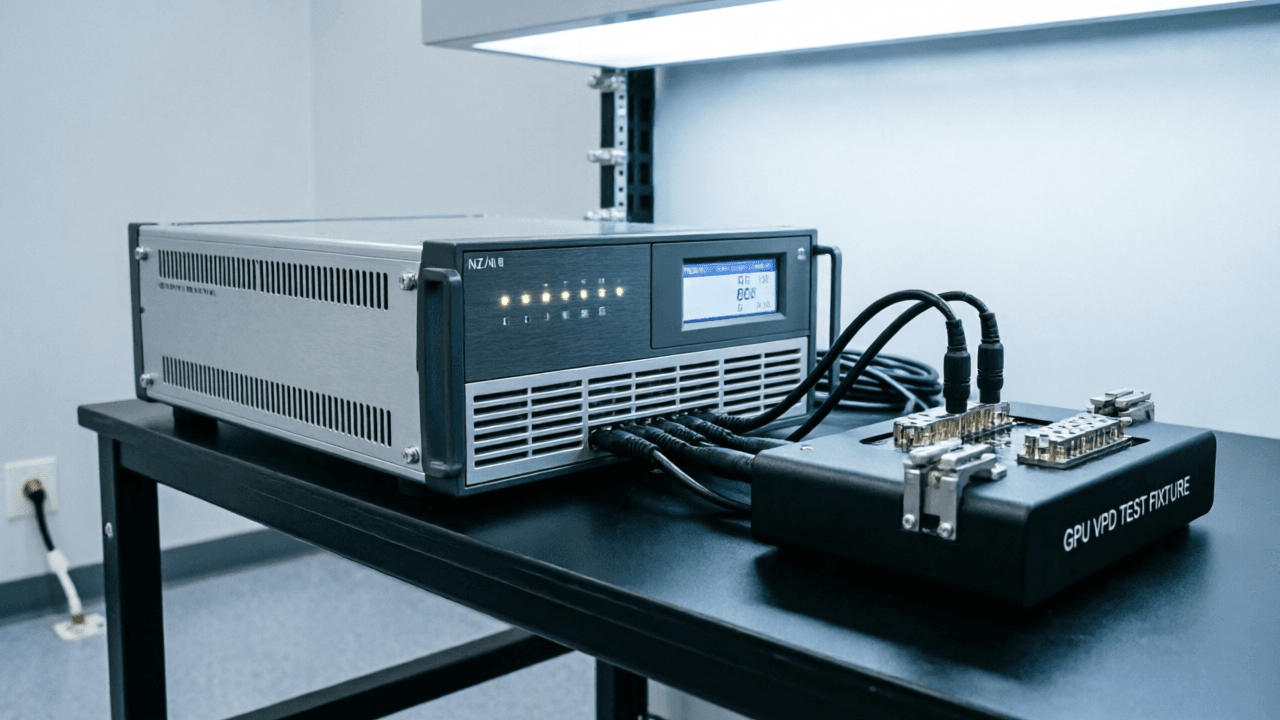
The aerospace field demands the highest level of precision and reliability. Testing and supplying power to aerospace and avionics products requires simulating aircraft grid conditions, which can vary significantly from terrestrial power grids. Avionics components must withstand power transients, frequency variations, and potential regenerative spikes from actuator motors.
To utilize the FTPS Series for avionics testing:
- Aircraft Grid Simulation: Program the power supply to replicate standard aircraft power characteristics (e.g., 115V AC, 400Hz). The FTPS Series allows precise frequency and voltage programming to simulate normal and emergency aircraft grid states.
- Transient Simulation: Use the programmable function capabilities to inject voltage dips, spikes, and frequency transients as required by avionics compliance standards.
- Regenerative Load Management: Aerospace actuators and motor controllers frequently generate regenerative power during operation. The bidirectional AC power supply will absorb this energy, accurately simulating the aircraft's limited grid capacity and preventing overvoltage conditions in the test setup.
- Electrical Experiments: Scientific research institutions and certification units can leverage the FTPS Series for advanced electrical experiments, utilizing its bidirectional capabilities to characterize the power quality and efficiency of next-generation avionics components.

Conclusion
Setting up a bidirectional AC power supply for regenerative grid simulation is critical for validating the performance and durability of modern electronic systems. The FTPS Series provides the necessary stability, precision, and bidirectional power handling required for home appliance durability experiments, communication electronics aging, and aerospace avionics testing. By properly configuring the sourcing and sinking parameters, engineers can ensure their products will reliably operate in complex, dynamic power environments.