
Understanding Core Validation Objectives
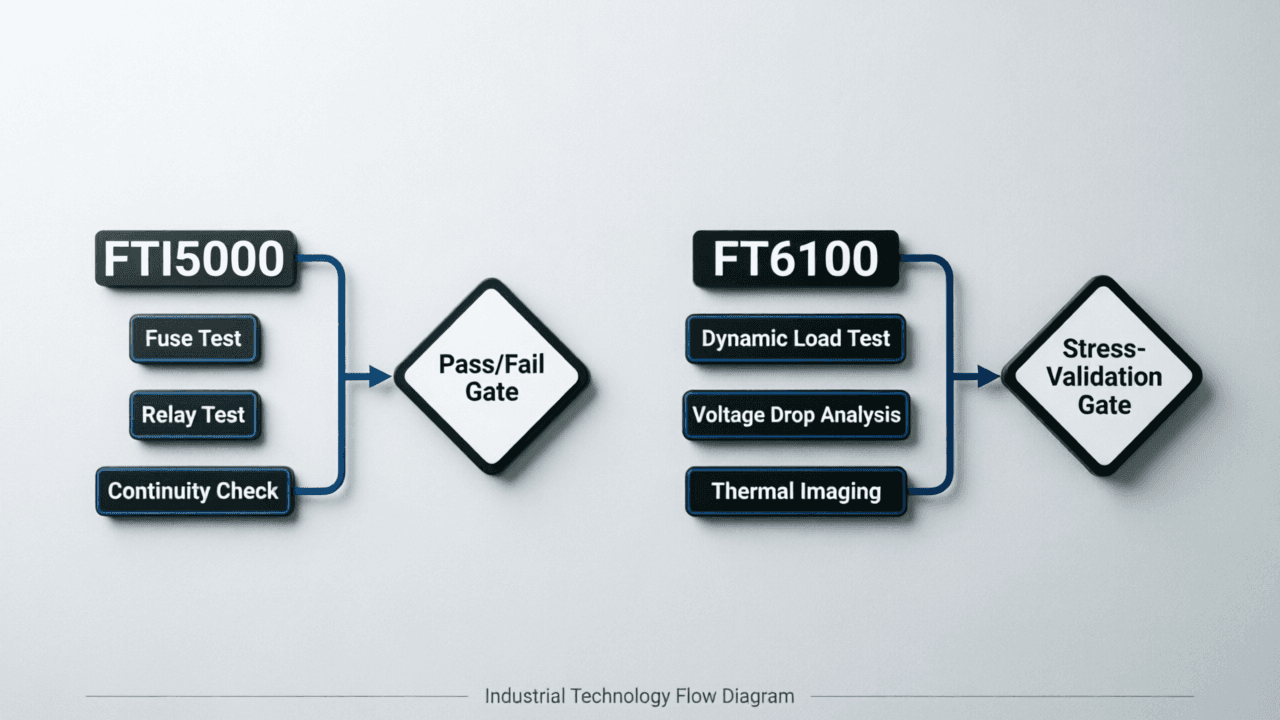
Wiring harness validation spans multiple failure modes — from catastrophic open circuits caused by fuse failure to subtle intermittent faults arising from micro-vibrations or thermal cycling at terminals. Two specialized instruments serve distinct but complementary roles: the FTI5000 series Fuse Tester and the FT6100 series Multichannel electronic load array. Neither replaces the other; instead, their optimal use hinges on whether the test goal centers on component-level robustness (fuse integrity, terminal contact resistance, relay actuation) or system-level stress resilience (dynamic current draw, connector heating under load, voltage drop across long harness runs).
When to Choose the FTI5000 Series Fuse Tester
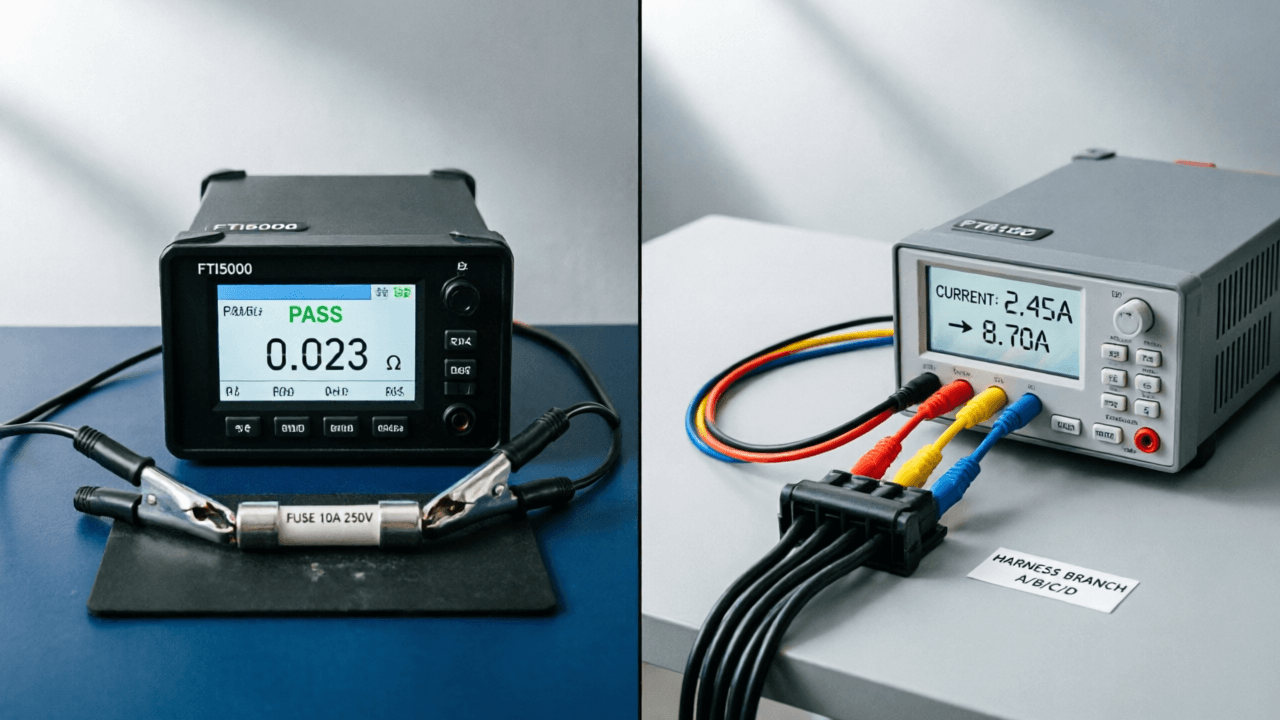
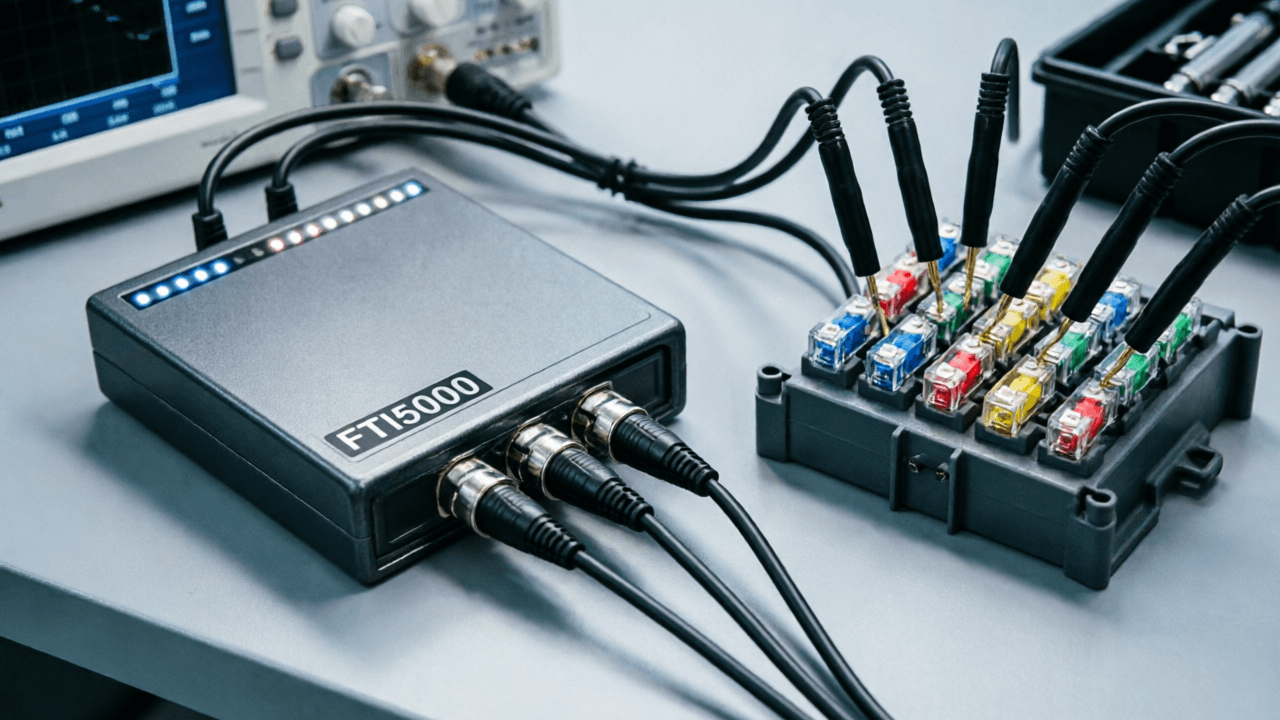
The FTI5000 series is purpose-built for verifying electrical continuity and mechanical durability of protective components and interconnects. Its design supports precise, repeatable low-current testing essential for detecting marginal connections before they fail in-field. Key applications include:
- Fuse durability testing: Verifying fuse response time, blow consistency, and post-blow insulation resistance under repeated thermal stress.
- Contact resistance measurement: Quantifying milliohm-level resistance at crimped terminals and connector interfaces — critical for identifying cold solder joints or oxidation-prone contacts.
- Intermittent fault detection: Using programmable pulse sequences and dwell times to simulate vibration-induced opens/closes, revealing latent connection issues invisible during static continuity checks.
Per its specification, the FTI5000 supports harness testing, terminal and connector test, and auto electrical box and relay test, making it indispensable for quality gate validation prior to vehicle integration. It does not simulate operational load profiles — rather, it validates that every protective and conductive element meets baseline functional thresholds.
When to Choose the FT6100 Series Multichannel Electronic Load
The FT6100 series delivers programmable, synchronized loading across up to 12 independent channels — enabling realistic emulation of real-world power demand across complex harness topologies. With a load power range of 50W ~ 1080W, it supports both steady-state and transient current profiles required for stress-testing harnesses under dynamic conditions.
This capability is vital for validating:
- Voltage drop under peak load: Measuring conductor losses across long runs or undersized gauges during high-current pulses (e.g., starter motor engagement or HVAC compressor startup).
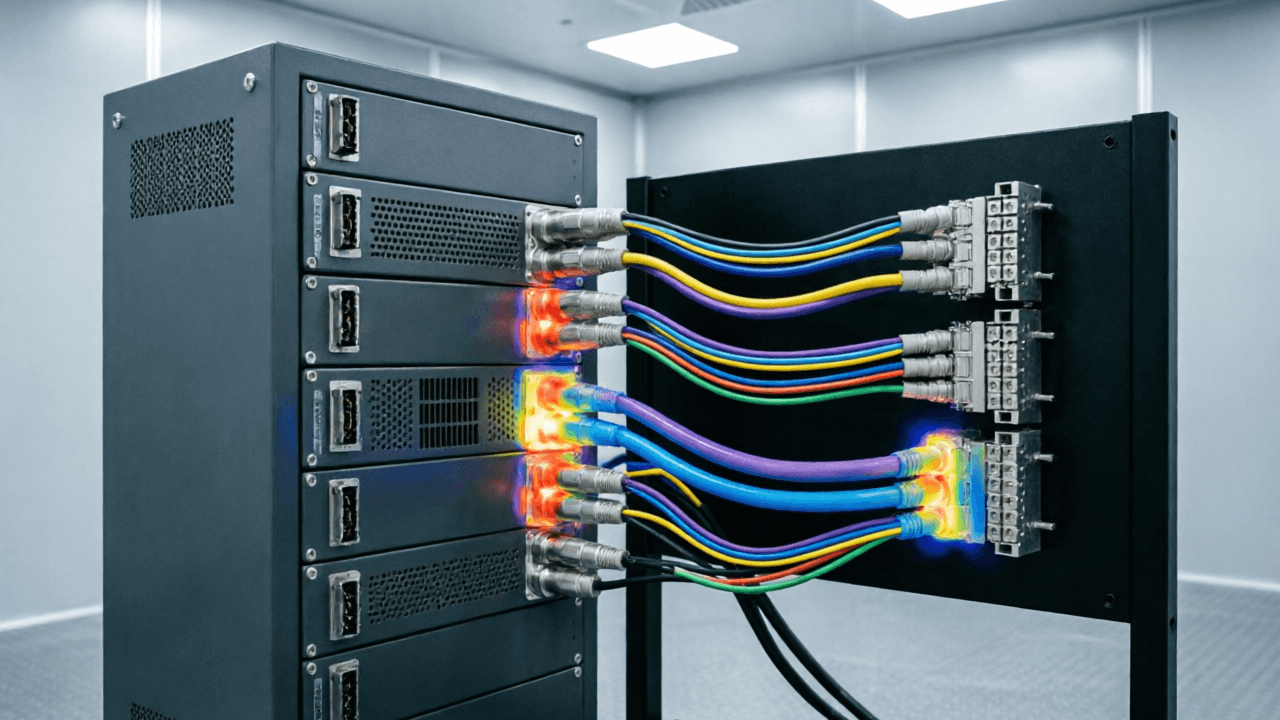
- Connector thermal stability: Monitoring temperature rise at mating interfaces while sustaining elevated current over time — exposing poor contact design or inadequate plating.
- Fuse coordination under cascaded loads: Simulating simultaneous activation of multiple subsystems to verify selective fuse tripping and avoid nuisance blows.
As noted in its product facts, the FT6100 is explicitly applied to automotive wiring harness, connectors, fuses, relays, and central electrical box testing, as well as BMS protection board balanced discharge and power tool production testing — all scenarios requiring controlled, scalable, and repeatable current sourcing.
Integrated Validation Strategy: Combining Both Tools
A comprehensive wiring harness validation protocol leverages both instruments sequentially. Begin with the FTI5000 to screen for foundational defects: fuse calibration drift, terminal crimp integrity, and relay coil resistance anomalies. This stage identifies 80% of latent manufacturing flaws early — reducing downstream rework.
Then deploy the FT6100 to subject the same harness to mission-profile current cycling: ramping loads to simulate ignition sequences, pulsing outputs to mimic LED lighting transients, or holding sustained draws to assess thermal derating margins. Only after passing both stages can a harness be certified for EOL (end-of-line) release.
Importantly, neither instrument substitutes for environmental stress screening (e.g., thermal shock or humidity exposure), nor do they replace CAN/LIN bus communication validation. But together, the FTI5000 and FT6100 form the electrical backbone of a robust, standards-aligned harness qualification workflow — ensuring reliability from component to system level.