
FaithTech
FaithTech entwickelt und fertigt programmierbare Gleichstrom-Stromversorgungen und elektronische Lasten für Anwendungen in den Bereichen Energie, Industrie, Automobil, Elektronik und Luft- und Raumfahrt.
Urheberrecht © 2026 FaithTech
FaithTech entwickelt und fertigt programmierbare Gleichstrom-Stromversorgungen und elektronische Lasten für Anwendungen in den Bereichen Energie, Industrie, Automobil, Elektronik und Luft- und Raumfahrt.
Urheberrecht © 2026 FaithTech

When outfitting a testing environment, whether in a research laboratory or on a manufacturing production line, the physical footprint of your equipment is a primary concern. Benchtop power supplies are designed with standalone usability in mind. They feature a chassis optimized for desktop placement, often incorporating tilt stands for easy reading of front-panel displays. This form factor is highly beneficial for laboratory technicians who need to frequently adjust parameters manually, observe readings directly, and utilize the unit across different workstations.
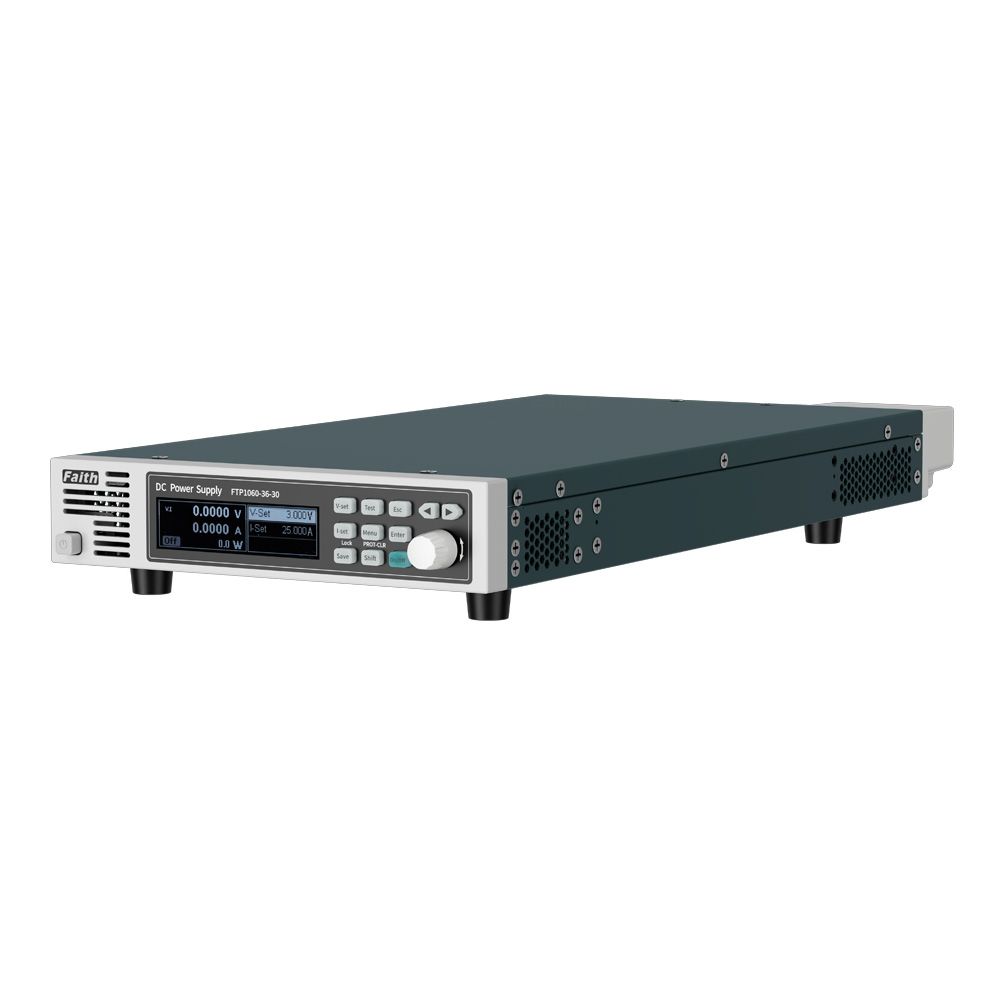
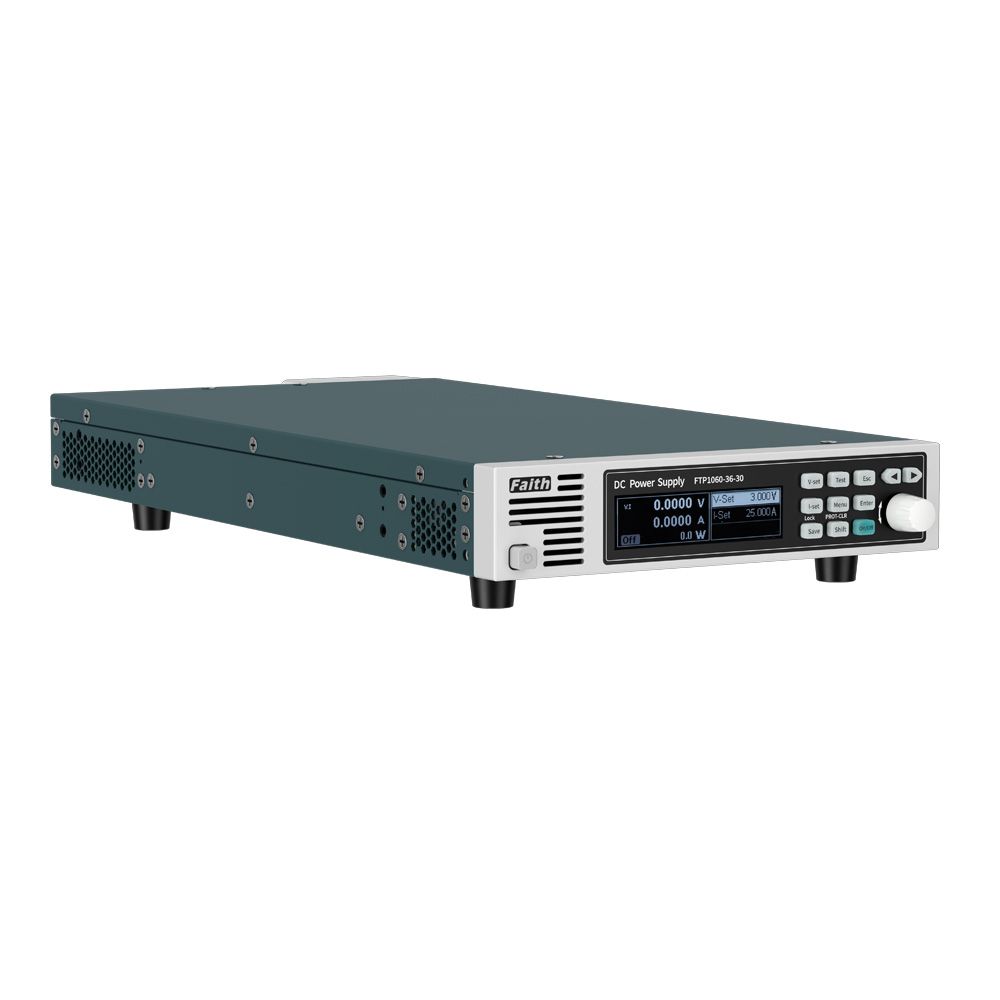
Conversely, a rack mount dc power supply is engineered for spatial efficiency within standardized equipment enclosures. Units like the FTP1000 Series Programmable DC Power Source are specifically designed with a small size, available in 1U/½19" or full 19" rack-mount configurations. This slim profile allows multiple units to be stacked vertically within a single equipment rack, drastically reducing the horizontal workspace required. For production lines where bench space is at a premium and must be shared with device-under-test (DUT) fixtures, automated handling tools, and computers, consolidating power delivery into a vertical rack ensures that the workbench remains uncluttered and optimized for assembly and testing throughput.
The degree to which a power supply can integrate into automated testing frameworks often dictates the choice between benchtop and rack-mount formats. Standard benchtop units, such as the FT10 Series Programmable DC Power Supply, excel in standalone or manually operated testing scenarios. They provide intuitive front-panel controls and clear numeric displays, making them ideal for engineering labs where prototypes are tested iteratively and parameters are changed frequently by hand.
However, production line testing relies heavily on automated test equipment (ATE). In these environments, a rack mount dc power supply provides distinct architectural advantages. Rack-mount units are designed to be securely fastened into standard 19-inch cabinets, often alongside other programmable instruments like oscilloscopes, electronic loads, and switching matrices. This centralized integration simplifies cable management, reduces the physical distance between the power source and the DUT, and minimizes electromagnetic interference. Furthermore, rack-mount instruments are typically controlled entirely via remote interfaces (such as Ethernet, CAN, or RS232), removing the need for front-panel interaction during automated sequences. The FTP1000 Series Programmable DC Power Source, for example, is built for this environment, allowing test engineers to build dense, automated test racks that execute complex testing sequences without operator intervention.
Maintenance routines and equipment accessibility vary significantly between the two form factors. Benchtop power supplies are inherently accessible. If a unit requires calibration, firmware updates, or replacement, it can simply be unplugged and moved to a maintenance shop. This plug-and-play nature minimizes system downtime, though it does require a dedicated storage space when not in active use or during transport.
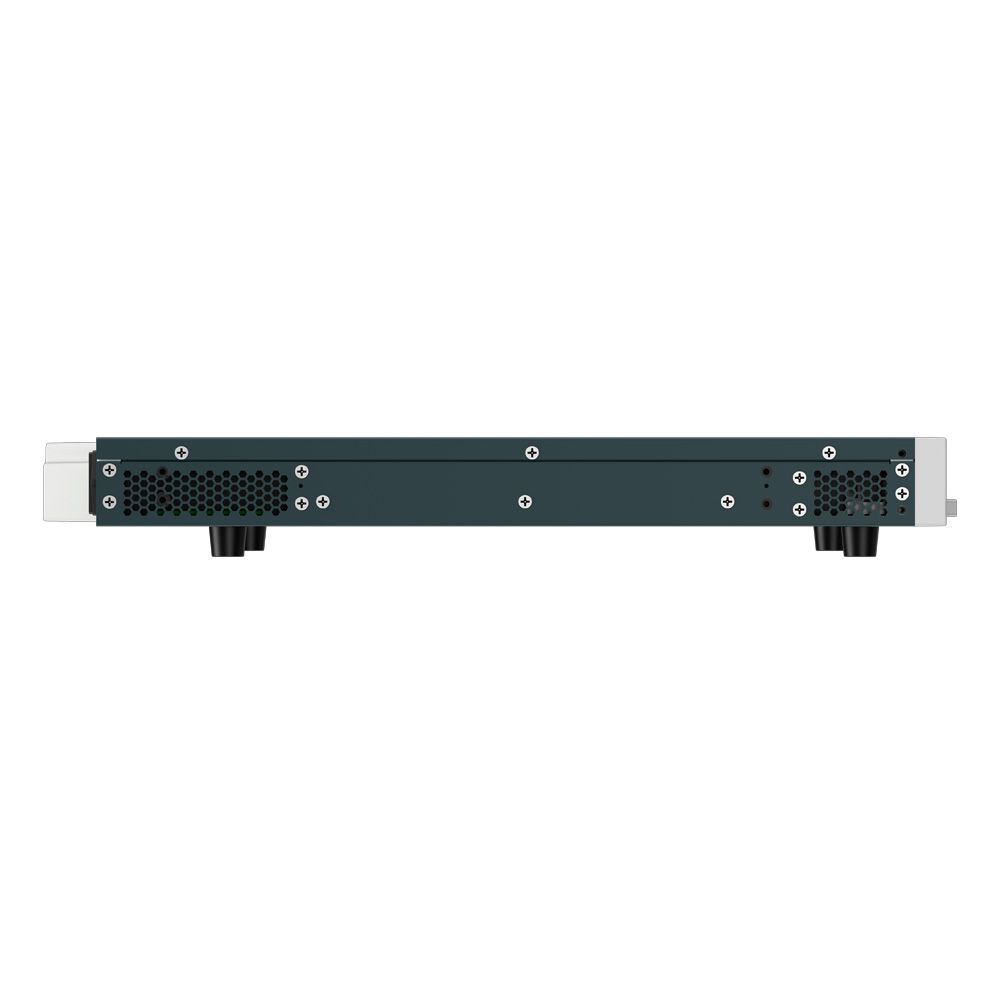
Rack-mount power supplies, on the other hand, are semi-permanently installed within a test rack. While this fixed installation protects the equipment from accidental bumps and spills common on a busy production line, it can present challenges for maintenance. Technicians must extract the unit from the rack, which may require disconnecting rear-mounted cabling and unfastening mounting screws. To mitigate this, modern rack-mount power supplies feature front-to-back cooling designs that prevent thermal buildup in densely packed cabinets, reducing the frequency of maintenance interventions. Additionally, their standardized 1U height ensures that when a unit must be replaced, the new unit fits seamlessly into the existing rack spacing, allowing production line testing to resume rapidly.
The decision between a benchtop and a rack-mount power supply ultimately rests on the specific workflow of your facility. If your application involves manual testing, frequent relocation between different laboratory benches, and standalone operation, a bench power supply is the appropriate choice. It provides the hands-on control and visibility needed for research and development.
Alternatively, if your workbench is part of a high-volume production line requiring automated test sequences, remote programming, and high-density instrumentation, a rack-mount configuration is superior. By choosing a 1U or ½19" rack mount dc power supply, you optimize vertical space, streamline system integration, and create a controlled, repeatable testing environment essential for manufacturing quality assurance.