

Verständnis der Kernziele der Validierung
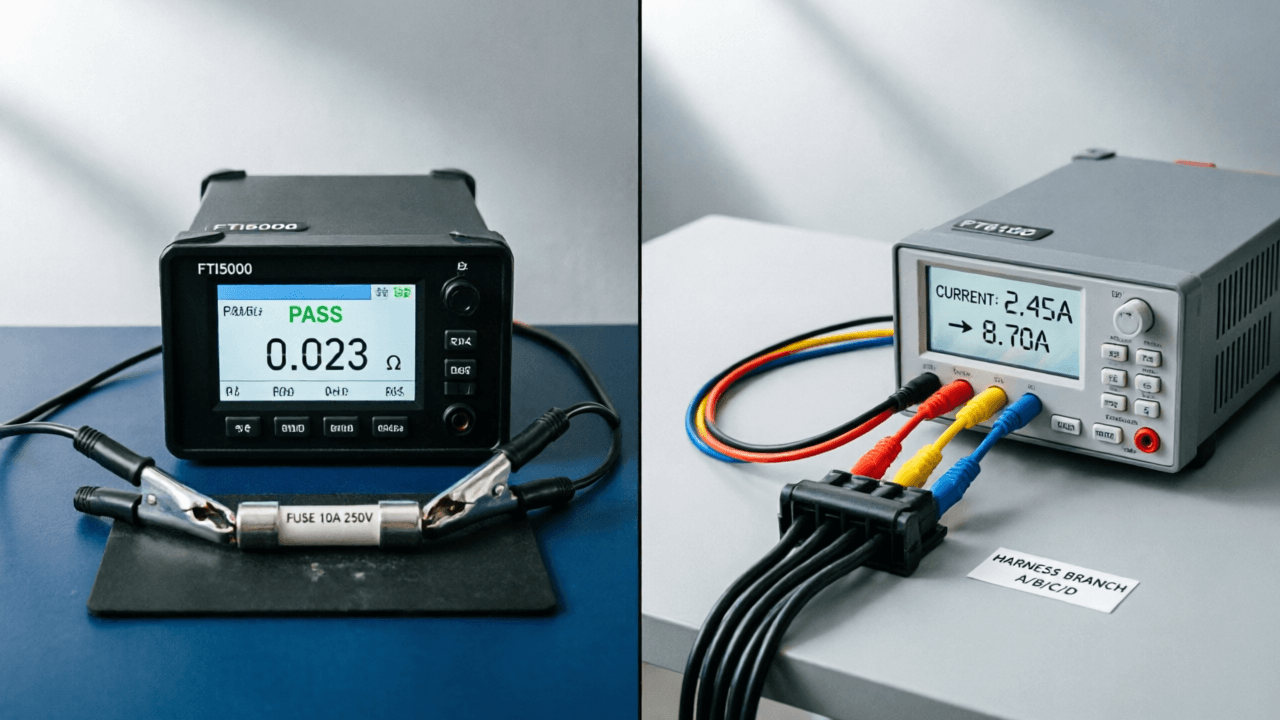
Wann Sie den Sicherungstester der FTI5000-Serie auswählen sollten
Die FTI5000-Serie ist speziell für die Überprüfung der elektrischen Durchgängigkeit und der mechanischen Dauerhaftigkeit von Schutzkomponenten und Verbindungen konzipiert. Ihr Design unterstützt präzise, wiederholbare Niedrigstrom-Prüfungen, die unerlässlich für die Erkennung grenzwertiger Verbindungen vor deren Ausfall im Feldeinsatz sind. Zu den wichtigsten Anwendungen gehören:
- Prüfung der Haltbarkeit von Sicherungen: Verifizierung der Ansprechzeit der Sicherung, der Auslösekonsistenz und des Isolationswiderstands nach dem Auslösen unter wiederholter thermischer Belastung.
- Kontaktwiderstandsmessung: Quantifizierung des Widerstands im Milliohm-Bereich an Crimpanschlüssen und Steckverbinderschnittstellen — entscheidend für die Identifizierung von Kaltlötstellen oder oxidationsanfälligen Kontakten.
- Erkennung intermittierender Fehler: Verwendung programmierbarer Pulssequenzen und Verweilzeiten zur Simulation vibrationsbedingten Öffnens/Schließens, wodurch latente Verbindungsprobleme aufgedeckt werden, die bei statischen Durchgangsprüfungen unsichtbar sind.
Laut Spezifikation unterstützt das FTI5000 Leitungssatzprüfung, Klemmen- und Steckverbinderprüfung sowie Prüfung von Autoelektrikboxen und Relais und ist somit unverzichtbar für die Quality-Gate-Validierung vor der Fahrzeugintegration. Es simuliert keine betrieblichen Lastprofile – vielmehr validiert es, dass jedes Schutz- und Leitungselement die grundlegenden funktionalen Schwellenwerte erfüllt.
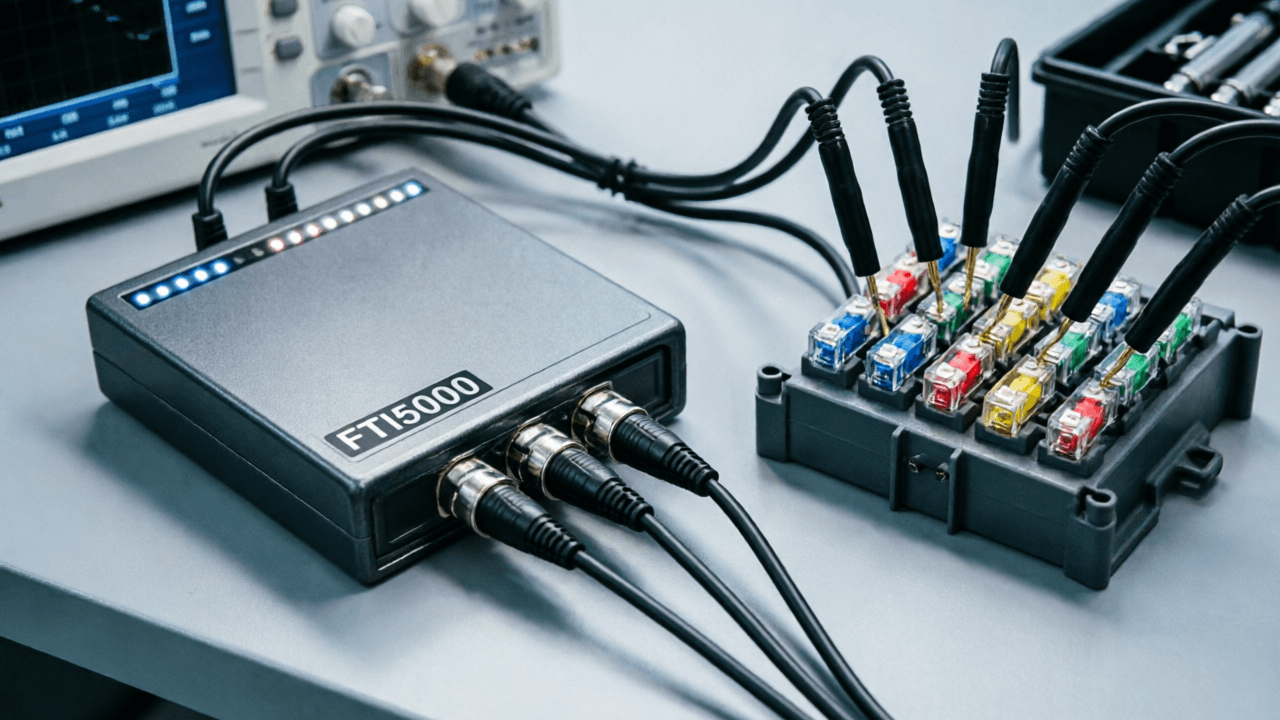
Wann Sie die Mehrkanal-Elektronische Last der FT6100-Serie wählen sollten
Die FT6100-Serie bietet programmierbare, synchronisierte Belastung über bis zu 12 unabhängige Kanäle — und ermöglicht so eine realistische Emulation realer Leistungsbedarfe über komplexe Leitungssatz-Topologien. Mit einem Lastleistungsbereich von 50W ~ 1080W unterstützt sie sowohl stationäre als auch transiente Stromprofile, die für Stresstests von Leitungssätzen unter dynamischen Bedingungen erforderlich sind.
Diese Fähigkeit ist für die Validierung unerlässlich:
- Spannungsabfall bei Spitzenlast: Messen von Leiterverlusten über lange Kabelstrecken oder bei zu gering dimensionierten Querschnitten während Hochstrompulse (z. B. beim Einrücken des Anlassermotors oder beim Anlauf des Klimakompressors).
- Thermische Stabilität des Steckverbinders: Überwachung des Temperaturanstiegs an den Kontaktstellen bei anhaltend erhöhtem Strom über die Zeit — Aufdeckung schlechten Kontaktdesigns oder unzureichender Beschichtung.
- Sicherungs-Koordination bei kaskadierten Lasten: Simulation der gleichzeitigen Aktivierung mehrerer Subsysteme zur Überprüfung des selektiven Auslösens der Sicherungen und zur Vermeidung von Fehlauslösungen.
Wie in den Produktdaten angegeben, wird der FT6100 explizit für die Prüfung von Automobil-Kabelbäumen, Steckverbindern, Sicherungen, Relais und zentralen Elektrikboxen sowie die Balancing-Entladung von BMS-Schutzplatinen und die Produktionsprüfung von Elektrowerkzeugen eingesetzt — alle Szenarien, die eine kontrollierte, skalierbare und wiederholbare Stromeinspeisung erfordern.
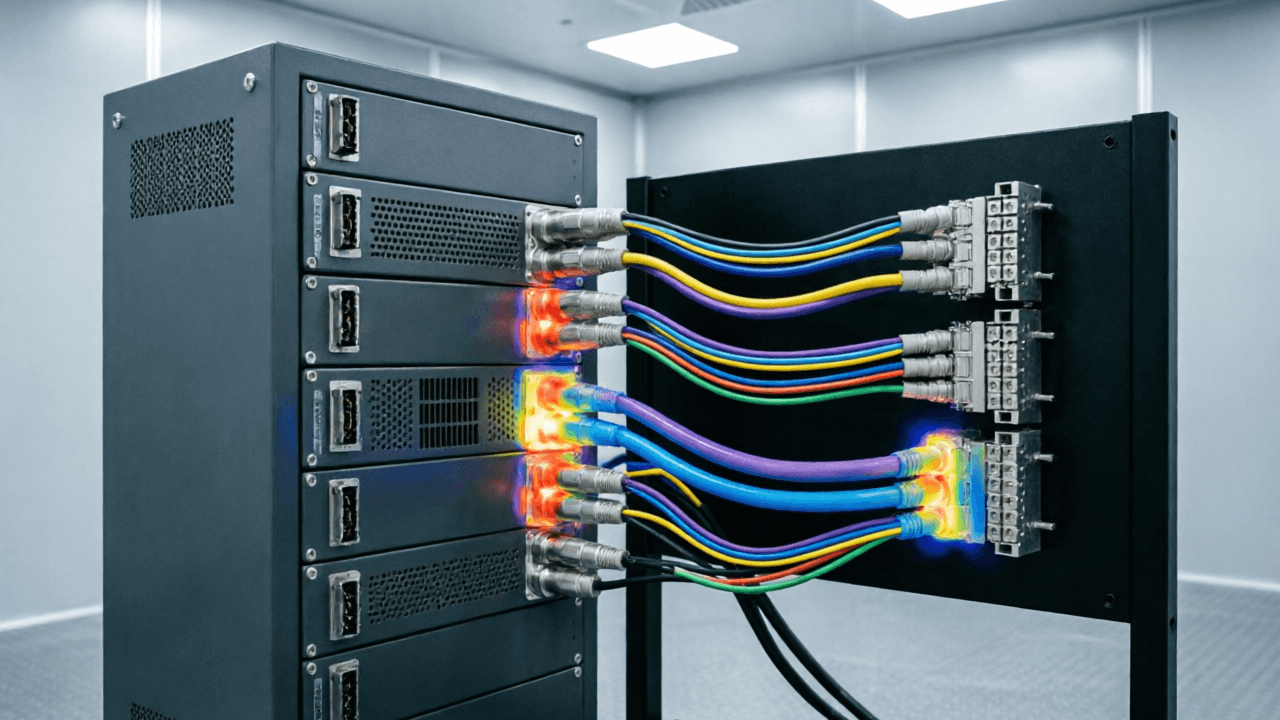
Integrierte Validierungsstrategie: Kombination beider Tools
Ein umfassendes Protokoll zur Kabelbaumvalidierung nutzt beide Instrumente sequenziell. Beginnen Sie mit dem FTI5000, um nach grundlegenden Defekten zu filtern: Kalibrierungsdrift der Sicherung, Integrität der Kontaktvercrimpung und Anomalien im Spulenwiderstand des Relais. Diese Phase identifiziert 80 % der latenten Fertigungsmängel frühzeitig — und reduziert so nachgelagerte Nacharbeit.
Setzen Sie dann das FT6100 ein, um denselben Kabelbaum Stromzyklen im Missionsprofil zu unterziehen: Lasten hochfahren, um Zündsequenzen zu simulieren, Ausgänge pulsen, um LED-Beleuchtungstransienten nachzuahmen, oder anhaltende Stromentnahmen aufrechterhalten, um thermische Derating-Reserven zu bewerten. Erst nach dem Bestehen beider Stufen kann ein Kabelbaum für die EOL-Freigabe (End-of-Line) zertifiziert werden.
Es ist wichtig zu beachten, dass keines der beiden Geräte das Environmental Stress Screening (z. B. Thermoschock oder Feuchtigkeitsbelastung) ersetzt, noch ersetzen sie die CAN/LIN-Bus-Kommunikationsvalidierung. Zusammen bilden jedoch der FTI5000 und FT6100 das elektrische Rückgrat eines robusten, normkonformen Leitungssatz-Qualifizierungsworkflows – und gewährleisten so die Zuverlässigkeit von der Bauteil- bis zur Systemebene.
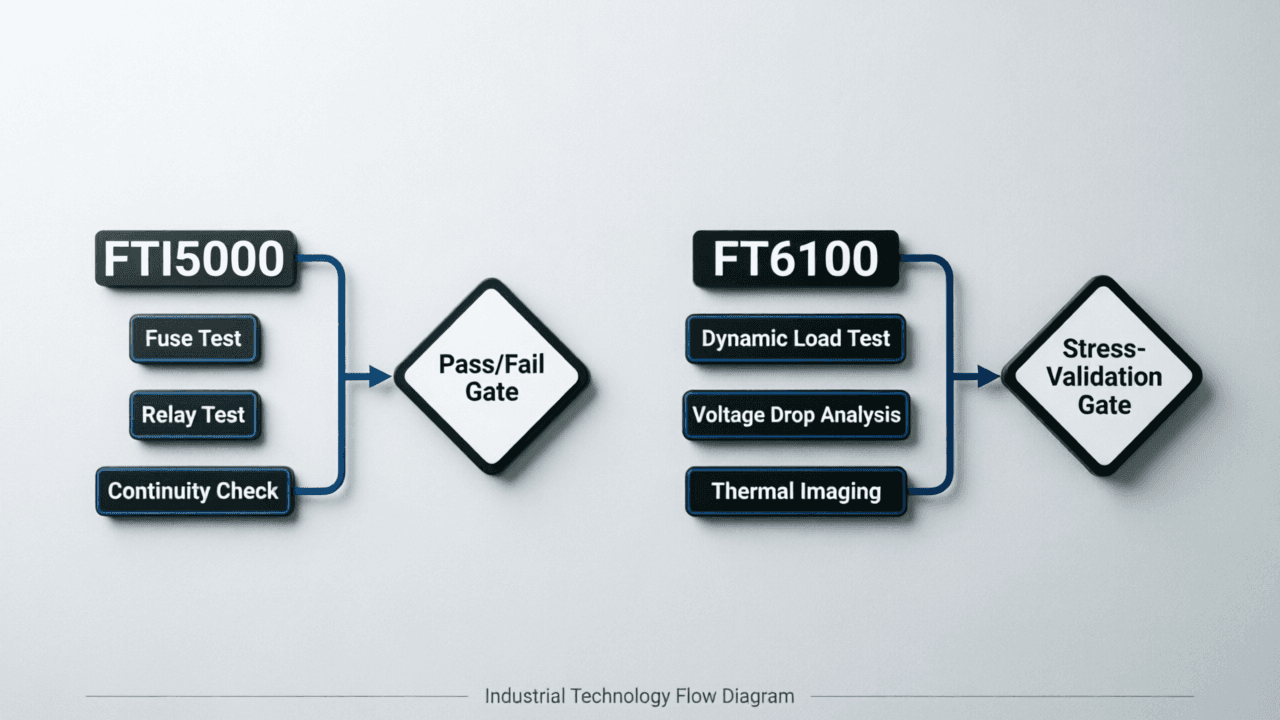 Die Validierung von Kabelbäumen umfasst mehrere Fehlermodi — von katastrophalen Unterbrechungen durch Sicherungsausfall bis hin zu subtilen intermittierenden Fehlern, die durch Mikrovibrationen oder Thermozyklierung an den Klemmen entstehen. Zwei spezialisierte Instrumente erfüllen unterschiedliche, aber sich ergänzende Rollen: der Sicherungstester der FTI5000-Serie und das Multikanal-Elektronische Lastarray der FT6100-Serie.Keines ersetzt das andere; stattdessen hängt ihr optimaler Einsatz davon ab, ob das Testziel auf Robustheit auf Komponentenebene (Sicherungsintegrität, Klemmenkontaktwiderstand, Relaisbetätigung) oder Belastungsresilienz auf Systemebene (dynamische Stromaufnahme, Erwärmung der Steckverbinder unter Last, Spannungsabfall über lange Leitungssätze) ausgerichtet ist.