
FaithTech
FaithTech entwickelt und fertigt programmierbare Gleichstrom-Stromversorgungen und elektronische Lasten für Anwendungen in den Bereichen Energie, Industrie, Automobil, Elektronik und Luft- und Raumfahrt.
Urheberrecht © 2026 FaithTech
FaithTech entwickelt und fertigt programmierbare Gleichstrom-Stromversorgungen und elektronische Lasten für Anwendungen in den Bereichen Energie, Industrie, Automobil, Elektronik und Luft- und Raumfahrt.
Urheberrecht © 2026 FaithTech

Batterie-Prüfsysteme – insbesondere solche, die in sicherheitskritischen Anwendungen wie Elektrofahrzeugen, netzskaligen Speichern und KI-Infrastruktur eingesetzt werden – erfordern metrologische Sorgfalt, die weit über einfache Genauigkeit hinausgeht. Da sich Lithium-Ionen-Chemien hin zu höherer Energiedichte und schnelleren Laderaten entwickeln, kumulieren sich selbst geringfügige Strommessfehler über Tausende von Zyklen, was fehlerhafte BMS-Algorithmen, nicht konforme Sicherheitsvalidierung und unerkannte Zellungleichgewichte zur Folge haben kann. Rückführbarkeit auf internationale Normen (z. B. ISO/IEC 17025, IEC 62620) ist nicht mehr optional: Sie ist grundlegend für Zertifizierung, Haftungsminimierung und Reproduzierbarkeit in Forschung und Entwicklung.
Der Hochpräzisions-Stromsensor der Serie FT-SCA liefert den erforderlichen metrologischen Anker: eine garantierte Stromgenauigkeit von 10 ppm über seinen Betriebsbereich. Dieses Maß an Stabilität und Linearität unterstützt die direkte Rückführbarkeit zu nationalen Metrologieinstituten – und ermöglicht es Laboren, interne Kalibrierhierarchien ohne externe Intervention für die routinemäßige Verifizierung aufzubauen. Das Design richtet sich an High-Fidelity-Anwendungen, bei denen die Messintegrität direkten Einfluss auf die funktionale Sicherheit und die Leistung auf Systemebene hat.
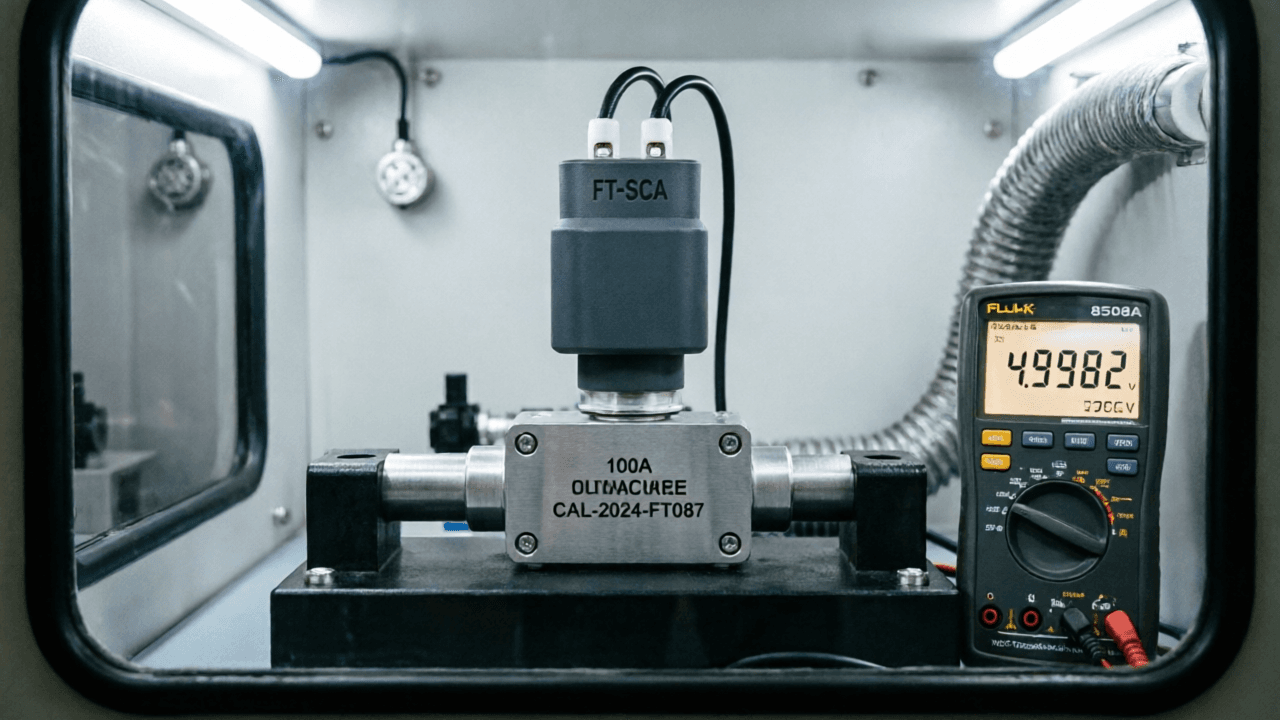
Die Integration beginnt mit der Ausrichtung an drei zentralen Batterie-Testmodalitäten: BMS-Validierung, erzwungenes Lade-/Entlade-Cycling und Charakterisierung der AI-Server-Stromversorgung (PSU).
Für die BMS-Validierung dient der FT-SCA als primäre Referenz während der Signalpfadverifikation. In Reihe mit dem zu testenden Batteriepack installiert – und über zeitgestempelte digitale Ausgabe synchronisiert – liefert der Sensor Ground-Truth-Stromdaten, gegen die der interne Stromschätzer des BMS (z. B. Shunt-basierte oder Hall-Effekt-Messwerte) gebenchmarkt wird. Dies ermöglicht es Ingenieuren, den Bias des Schätzers, das Grundrauschen und die dynamische Antwortverzögerung unter realen Transienten zu quantifizieren – einschließlich Rekuperationspulsen und Lastsprungereignissen, die in EV-Antriebssträngen üblich sind.
Beim Zwangslade-/Entladetest wird Präzision missionkritisch. Das FTS8500 Battery Forced Charge/Discharge Test System verlässt sich auf eng kontrollierte Stromprofile, um Missbrauchsbedingungen zu simulieren (z. B. Überladung, Kurzschluss-Simulation, Ausbreitung des thermischen Durchgehens). Wenn FT-SCA-Sensoren als Referenzstandard des Systems eingesetzt werden – entweder integriert in den Regelkreis des FTS8500 oder extern für eine unabhängige Verifizierung verwendet – stellen sie sicher, dass vorgegebene Ströme (z. B. ±500 A bei 0,1 % Sollwerttoleranz) mit einer Unsicherheit von ≤10 ppm geliefert und gemessen werden. Dies beseitigt Mehrdeutigkeiten bei der Korrelation von Spannungsabfall, Temperaturanstieg oder Gasentwicklungsmetriken mit spezifischen Stromstärken.
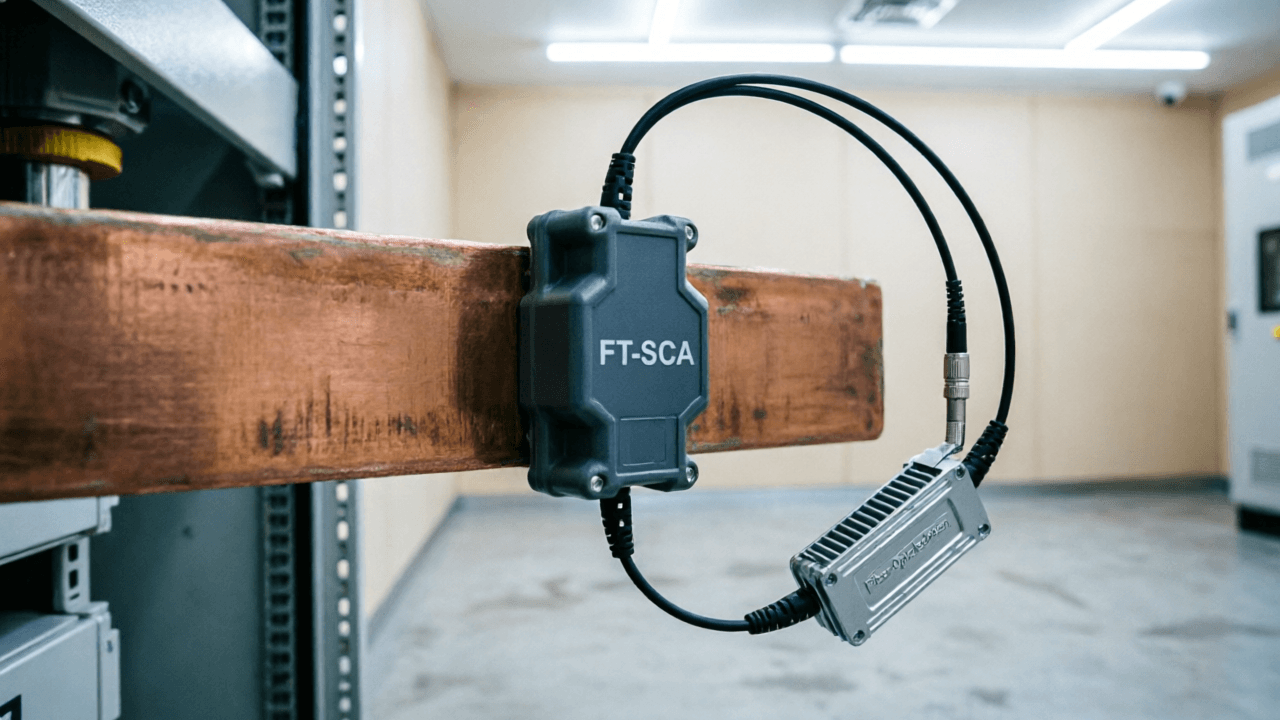
Für KI-Server-PSU-Tests, bei denen DC-DC-Wandler im Multi-Kilowatt-Bereich bei 48V–54V mit einer Transientenantwort im Mikrosekundenbereich betrieben werden, bieten FT-SCA-Sensoren die Bandbreite und geringe Phasenverschiebung, die erforderlich ist, um Ripple, Burst-Lastsprünge und Effizienz-Derating-Effekte zu erfassen. Ihr Einsatz unterstützt die Validierung der Stromverteilungs-Genauigkeit der PSU über parallele Rails hinweg – eine wesentliche Anforderung für GPU-beschleunigte Compute-Racks.
Der effektive Einsatz von FT-SCA-Sensoren erfordert die Berücksichtigung der Integration auf Systemebene:
Der breite Anwendungsbereich des FT-SCA – von der medizinischen Bildgebung über Photovoltaik-Wechselrichter und EV-Antriebsstränge bis hin zum Schienenverkehr – bestätigt seine Robustheit gegenüber elektromagnetischen, thermischen und mechanischen Belastungen. Seine Eignung für Verifizierung und Kalibrierung-Workflows ist in seiner Architektur inhärent verankert – kein nachträglicher Gedanke.
Hochpräzise Stromerfassung ist kein auf Komponentenebene beschränktes Thema mehr – sie ist Infrastruktur auf Systemebene. In Batterie-Testumgebungen, in denen Entscheidungen über Zellchemie, Pack-Architektur und Firmware-Logik von einer Spannungsauflösung im µV-Bereich und einer Stromtreue im ppm-Bereich abhängen, liefert die FT-SCA-Serie die metrologische Grundlage, die für Vertrauen bei Skalierung erforderlich ist. Egal, ob es um die Validierung von Festkörperbatterien der nächsten Generation, die Zertifizierung von AI-Rack-PSUs für den Hyperscale-Einsatz oder die Gewährleistung der Konformität für UN 38.3-Transporttests geht – die Integration von FT-SCA-Sensoren wandelt die Kalibrierung von periodischer Wartung in kontinuierliche Absicherung um.
Erfahren Sie mehr über den FT-SCA series High precision current sensor und entdecken Sie, wie er mit fortschrittlichen Batterie-Testplattformen wie dem FTS8500 Battery Forced Charge/Discharge Test System integriert wird.