
FaithTech
FaithTech entwickelt und fertigt programmierbare Gleichstrom-Stromversorgungen und elektronische Lasten für Anwendungen in den Bereichen Energie, Industrie, Automobil, Elektronik und Luft- und Raumfahrt.
Urheberrecht © 2026 FaithTech
FaithTech entwickelt und fertigt programmierbare Gleichstrom-Stromversorgungen und elektronische Lasten für Anwendungen in den Bereichen Energie, Industrie, Automobil, Elektronik und Luft- und Raumfahrt.
Urheberrecht © 2026 FaithTech

Hydrogen fuel cells are a cornerstone of the clean energy transition, demanding rigorous validation to ensure reliability and efficiency across various operating conditions. Testing these systems presents unique engineering challenges, primarily due to the low-voltage, high-current nature of fuel cell stacks. A single fuel cell generates a relatively low voltage, meaning that a stack must be composed of many cells in series to achieve a usable voltage. However, when testing individual cells or short stacks, engineers face the challenge of drawing massive currents at extremely low voltages without causing instability in the testing equipment.
To address these specific requirements, a comprehensive hydrogen fuel cell testing solution must integrate specialized equipment. By combining the FTP Series wide-range programmable DC power source with the NZ/N series ultra-low voltage and high current DC electronic load, engineers can effectively simulate real-world conditions and validate both fuel cell stacks and their associated DC-DC converters.
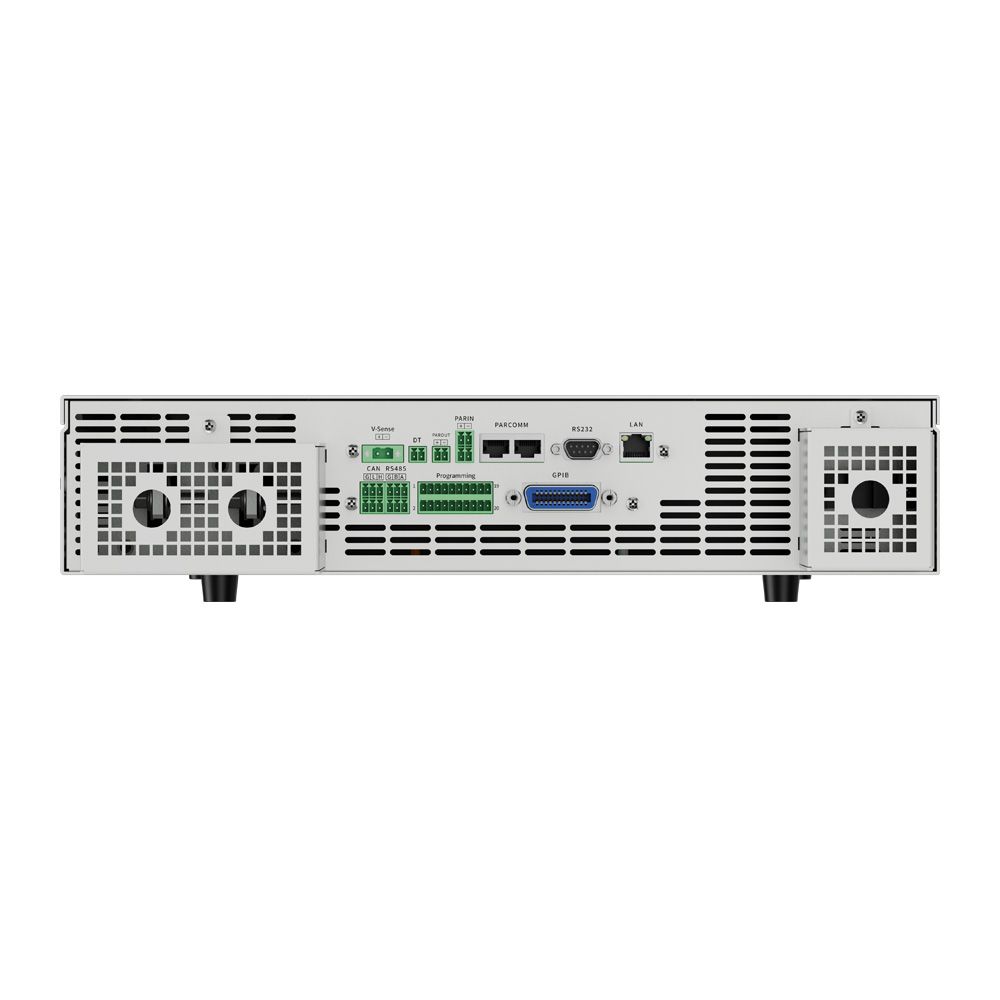
The fundamental challenge in testing hydrogen fuel cell stacks lies in the electrical characteristics of the cells themselves. As current demand increases, the voltage of the fuel cell drops significantly. Traditional electronic loads often struggle to maintain stability at these ultra-low voltage levels, leading to inaccurate measurements or premature test termination. Furthermore, testing the DC-DC converters that interface with these stacks requires a power source capable of simulating the dynamic behavior of the fuel cell under varying load conditions.
The NZ/N series ultra-low voltage and high current DC electronic load is specifically designed to address this bottleneck. It offers exceptional performance in low-voltage, high-current scenarios, capable of sinking up to 1200A at 2.4V and an impressive 5000A at just 0.2V. This capability is critical for battery forced discharge testing, CPU and power device power supply system testing, and specifically, fuel cell testing where maintaining a stable load at minimal voltage is essential for accurate characterization.
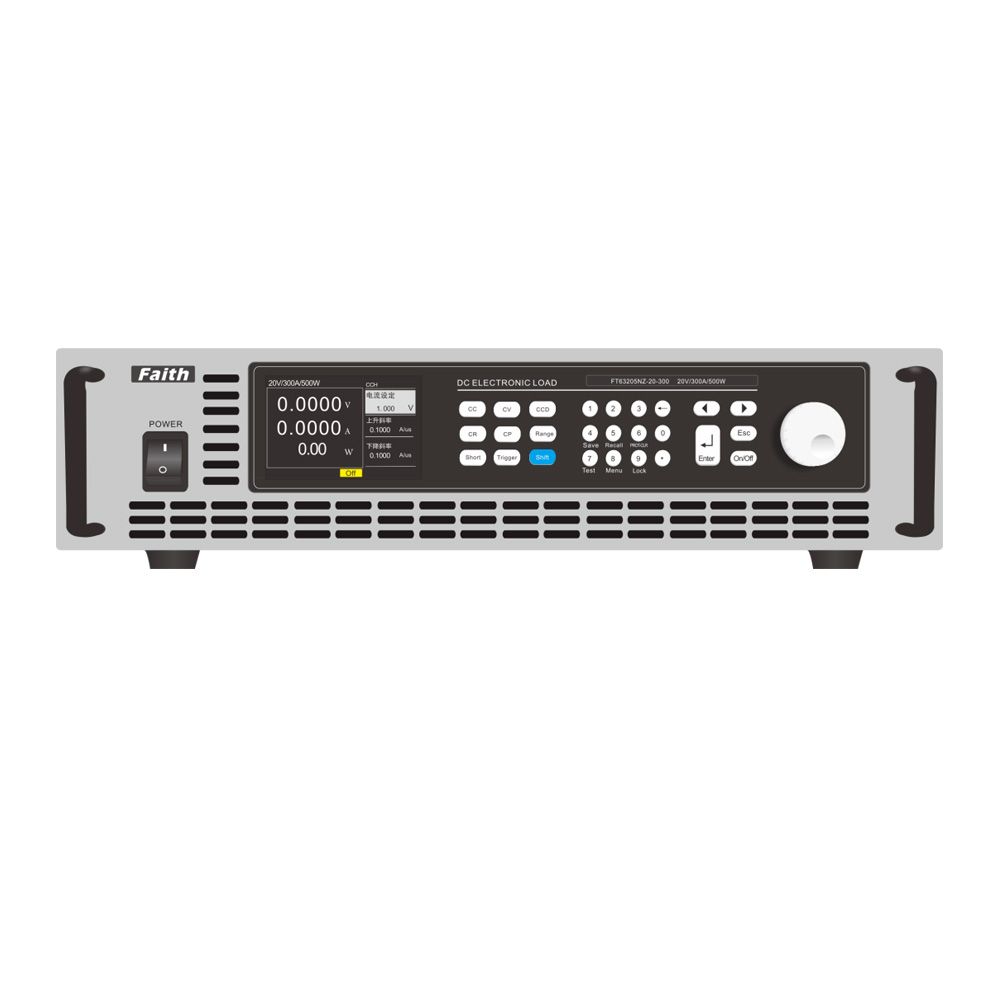
A robust test setup requires both precise sourcing and sinking capabilities. For simulating the fuel cell stack's electrical behavior during DC-DC converter validation, the FTP Series wide range programmable DC power source serves as the ideal foundation. As an Onsemi-verified, best-selling product, the FTP Series provides the multi-specification flexibility required in modern power electronics laboratories. It can accurately simulate the power supply environment of vehicle, airborne, and shipboard electronic equipment, ensuring that the DC-DC converter is tested against realistic automotive and industrial profiles.
When testing the fuel cell stack directly, the NZ/N series load is connected to the stack output. Engineers can program the load to draw high currents—up to several thousand amperes—while the stack voltage dips to near-zero levels. This allows for the precise mapping of the stack's polarization curve and the identification of performance limitations, such as mass transport losses at high current densities.
For DC-DC converter validation, the FTP Series DC source replaces the physical fuel cell stack, providing a controlled and repeatable input. The FTP Series simulates the stack's dynamic voltage drops and transient responses. The output of the DC-DC converter is then connected to a standard electronic load (or another NZ/N series load, depending on the converter's output voltage) to verify its conversion efficiency, thermal management, and control stability under varying load conditions.
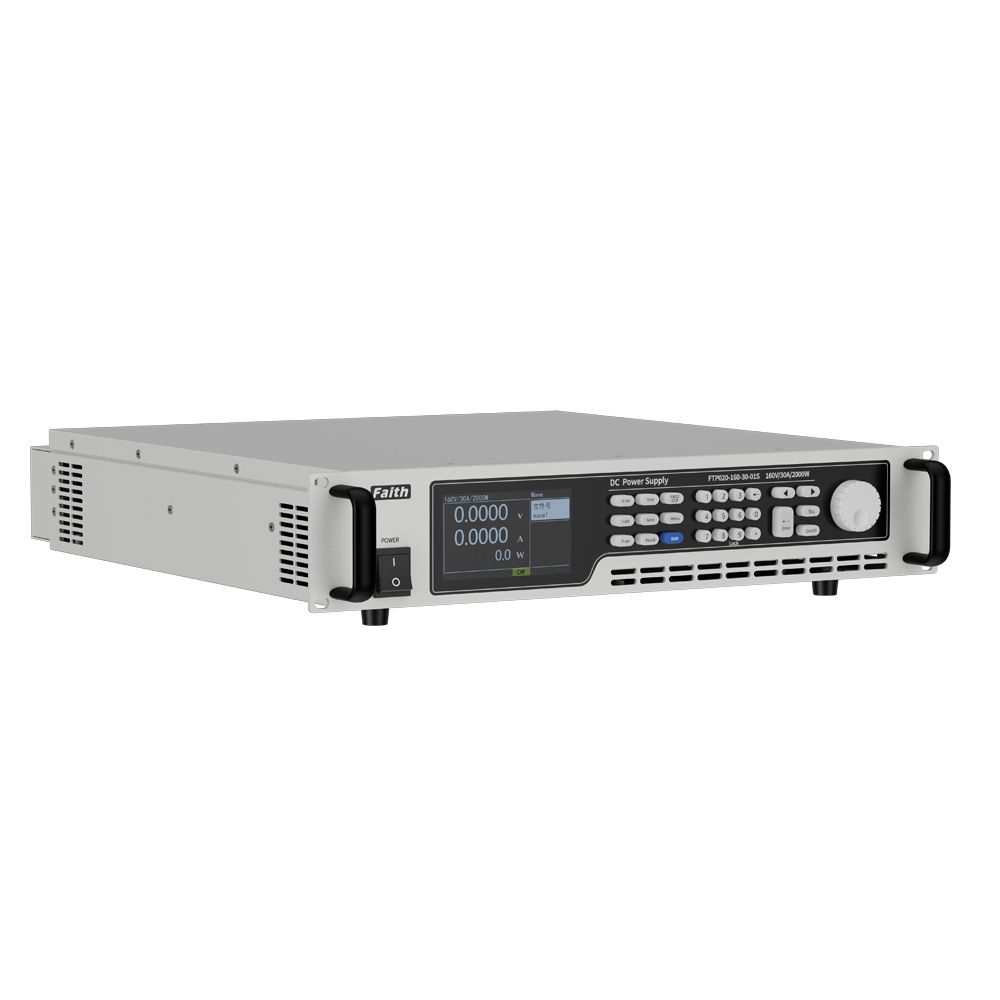
Effective validation extends beyond single components. FaithTech provides an integrated hydrogen fuel cell testing solution that encompasses stack and single cell testing, DC-DC converter validation, hydrogen circulation pump and air compressor testing, and complete fuel cell engine system evaluations. This holistic approach ensures that every subsystem, from the electrochemical reaction within the stack to the power electronics converting its output, is rigorously tested for R&D, production, and maintenance scenarios.
By utilizing the FTP Series for precise source simulation and the NZ/N series for demanding high-current loading, engineers can achieve a highly controlled test environment. This configuration not only addresses the unique low-voltage, high-current challenges inherent to fuel cell technology but also ensures that the power electronics interfacing with these systems are validated to the highest standards of reliability and performance.