

Comprendre les compromis liés au nombre de canaux dans la simulation de batteries en production
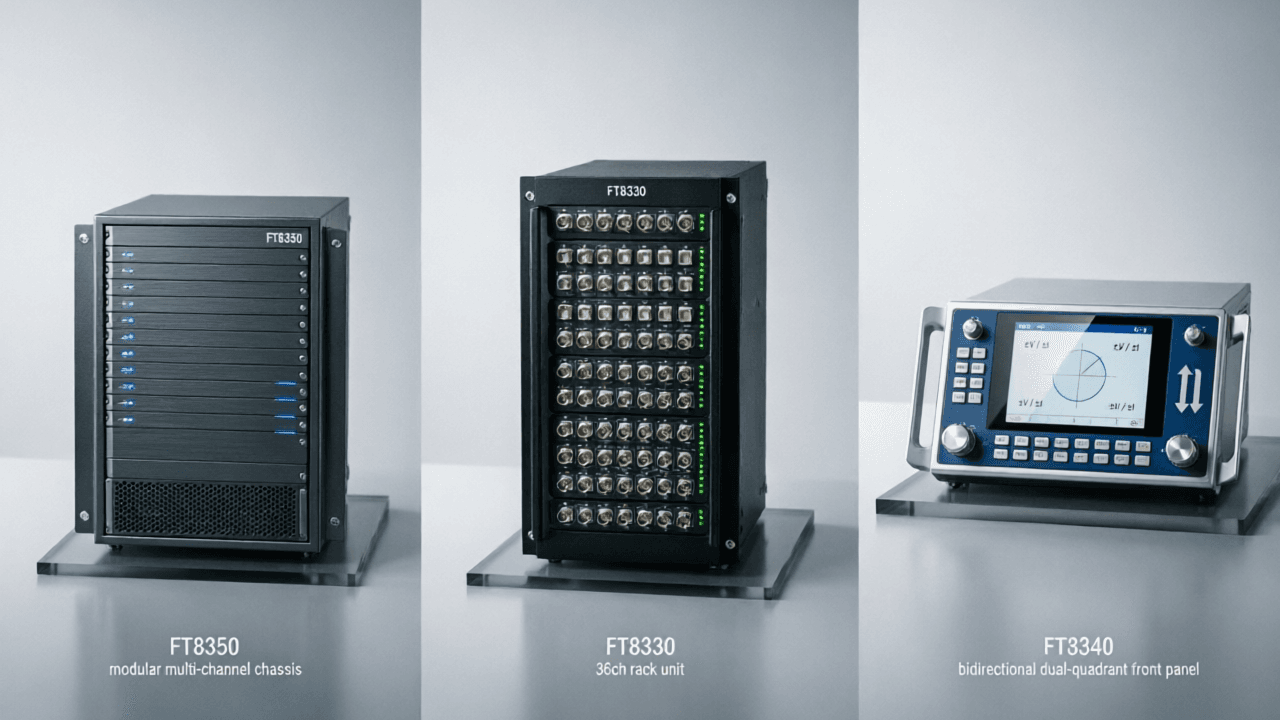
Dans les environnements de production à haut volume—en particulier pour les systèmes de gestion de batterie (BMS), l'électronique grand public et l'outillage électroportatif—le choix du simulateur de batterie a un impact direct sur le débit de test, la flexibilité du système et la fidélité de validation. Un point de décision clé est la comparaison du nombre de canaux de simulateur de batterie, où les ingénieurs doivent équilibrer densité, isolation et capacité fonctionnelle entre les plateformes. Les séries FT8330 (36 canaux), FT8350 (multicanaux) et FT8340 (bidirectionnelle) répondent chacune à des segments distincts du flux de travail de test de production—non pas comme des alternatives interchangeables, mais comme des solutions conçues sur mesure, alignées sur des exigences de validation spécifiques.
Débit et indépendance des canaux : Densité vs. Isolation
La série FT8330 offre 36 canaux indépendants dans une seule unité de rack 19 pouces, optimisée pour les tests fonctionnels parallèles au niveau des cellules BMS. Son architecture à canaux fixes prend en charge le balayage haute densité des paramètres de tension, de courant et de synchronisation sur de grands packs de batteries — idéale pour la R&D automatisée de cartes de protection charge-décharge et la validation de cœurs de supercondensateurs. Étant donné que les 36 canaux partagent une infrastructure de contrôle commune, la synchronisation est étroite, mais le confinement des défauts au niveau des canaux repose sur la conception d'isolation interne plutôt que sur une séparation physique ou électrique.
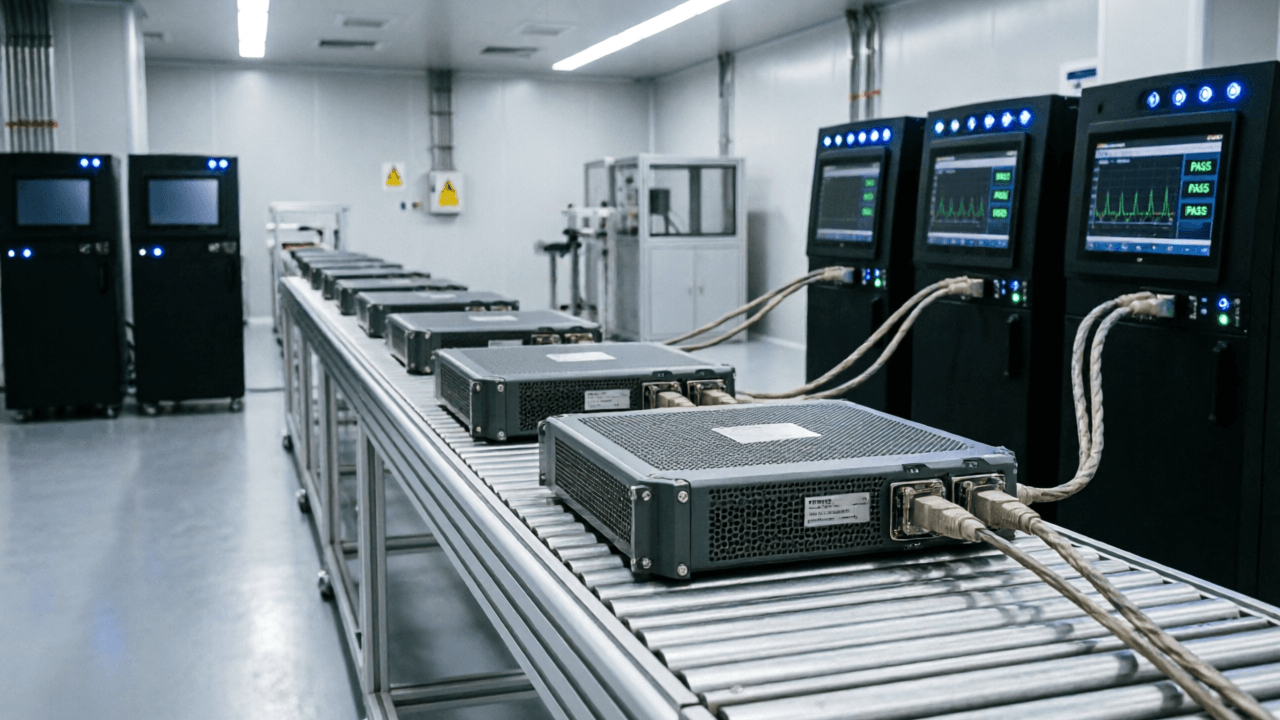
En revanche, la série FT8350 adopte une architecture modulaire multicanal où le nombre de canaux évolue via des emplacements configurables—permettant d'adapter le nombre de canaux par station de test. Cette modularité améliore l'indépendance des canaux : chaque canal fonctionne avec des chemins dédiés de mesure, de régulation et de communication, réduisant le risque de diaphonie lors de paliers de charge dynamiques simultanés (par exemple, simulation simultanée de surtension + court-circuit sur des cellules adjacentes). Pour les lignes de production d'électronique grand public testant des casques, des tablettes ou des cigarettes électroniques, cette indépendance garantit un comportement déterministe lors de la validation de la logique de protection en cascade sur plusieurs entrées de batterie.
Exigences de bidirectionnalité : quand la régénération est importante
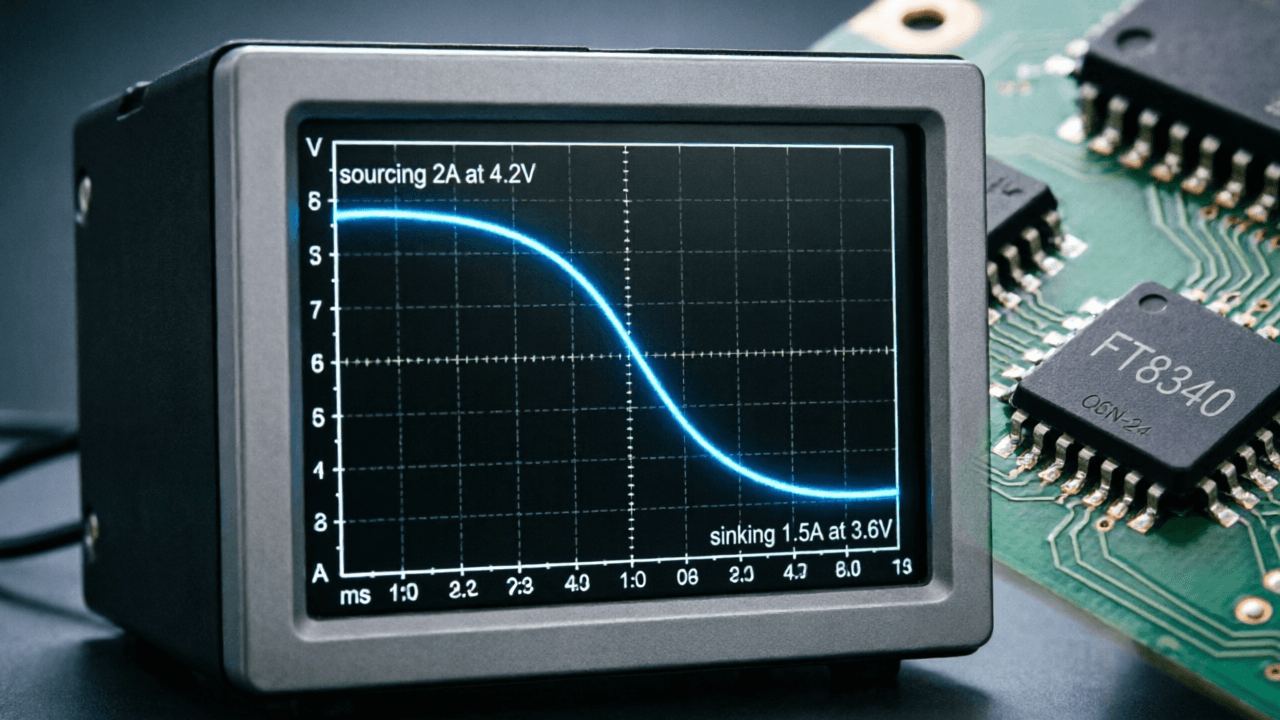
La série FT8340 se distingue en tant qu'alimentation bidirectionnelle simulant une cellule de batterie—capable de fournir et d'absorber de la puissance avec des transitions de quadrant transparentes. Cette capacité est essentielle pour la validation BMS en boucle fermée où l'émulation de décharge réaliste (par exemple, la simulation de l'affaissement de tension de cellule sous charge) doit être associée à la récupération d'énergie régénérative pendant les phases de charge simulées. Des applications telles que les tests CMS (Système de gestion de surcapacité) et la validation de sécurité de charge/décharge forcée dépendent d'une véritable fidélité bidirectionnelle—pas seulement de la capacité d'absorption, mais d'une inversion précise et à faible latence entre les quadrants.
Bien que les FT8330 et FT8350 prennent en charge le sourcing unidirectionnel et le sinking passif (via des charges externes ou une dissipation interne), ils ne disposent pas de retour d'énergie actif. En production à haut débit, cette distinction affecte la gestion thermique, le dimensionnement de l'alimentation et le coût opérationnel à long terme — en particulier dans les installations ayant des objectifs stricts d'efficacité énergétique ou une capacité de refroidissement limitée. Le fonctionnement bidirectionnel du FT8340 permet une intégration plus étroite avec FaithTech Battery Simulator, BMS Testing & Battery Safety Solutions, en particulier lorsque des cycles de charge/décharge forcés sont imposés par les normes de sécurité.
Sélectionner la bonne plateforme pour votre ligne de production
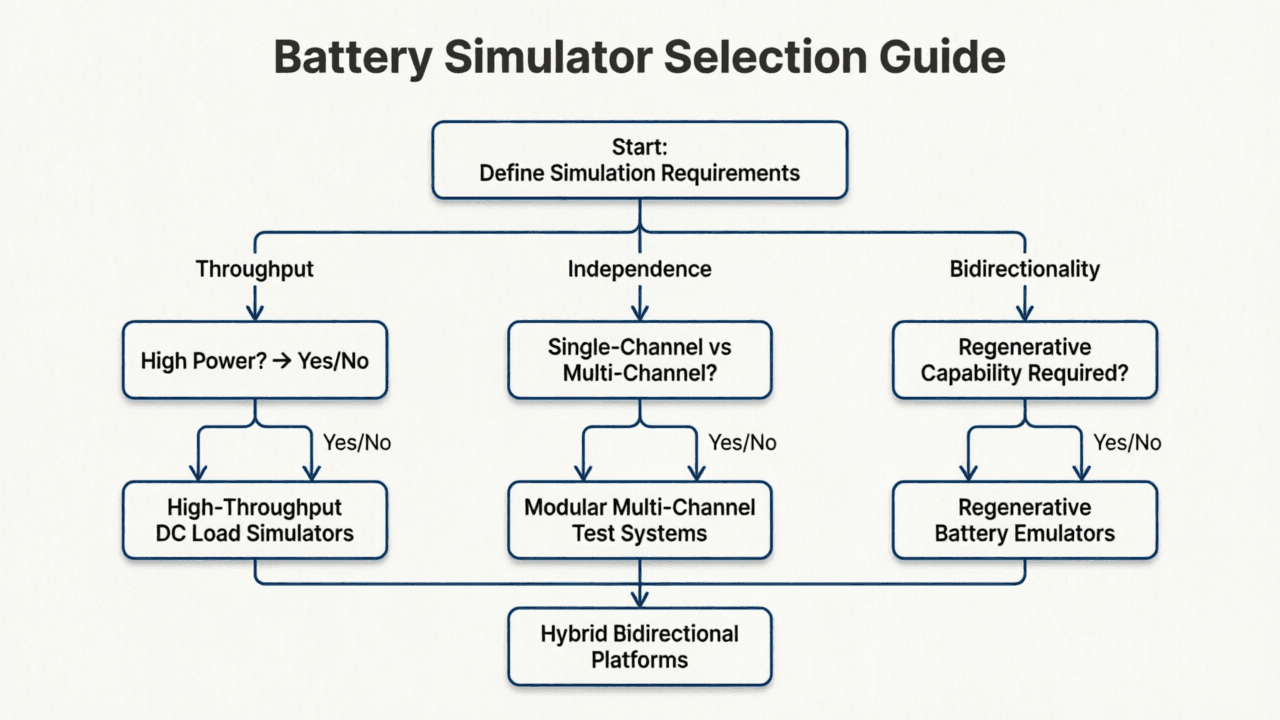
Aucun modèle unique ne domine dans tous les cas d'utilisation — la sélection dépend de trois facteurs interdépendants :
-
Priorité au débit : Choisissez la série FT8330 lorsque le nombre maximal de canaux par unité de rack est critique et que les séquences de test sont hautement synchronisées (par ex., scan fonctionnel BMS du pack complet). Sa densité de 36 canaux réduit l'encombrement et simplifie l'intégration du système pour une vérification réussite/échec répétable et à grande vitesse.
-
Priorité d'indépendance des canaux : Sélectionnez la série FT8350 lorsque les DUT nécessitent une stimulation isolée — comme la validation de circuits intégrés individuels de surveillance de cellules au sein d'un ASIC BMS multi-cellules, ou le test d'entrées de batterie en parallèle dans les outils électroportatifs où la propagation des défauts doit être contenue. Sa conception évolutive basée sur des emplacements permet d'adapter précisément le nombre de canaux à la complexité du DUT.
-
Priorité de bidirectionnalité : Déployez la série FT8340 lorsque les plans de test incluent des scénarios dynamiques de recyclage d'énergie—validation de réponse CMS, préconditionnement d'emballement thermique, ou protocoles de sécurité pour batteries au lithium nécessitant une décharge contrôlée dans le simulateur. Son architecture bidirectionnelle élimine les bancs de charge externes et prend en charge des bandes passantes de boucle de régulation plus étroites.
Les trois plateformes couvrent des domaines d'application qui se chevauchent — notamment les tests BMS, la validation d'électronique grand public et la production d'outils électriques — mais leurs différences architecturales les rendent complémentaires plutôt que concurrentes. Les ingénieurs concevant des systèmes de test de production de nouvelle génération devraient évaluer non seulement le nombre de canaux, mais aussi la manière dont le comportement des canaux (indépendant vs. synchronisé), la directionnalité (unidirectionnel vs. bidirectionnel) et l'évolutivité (fixe vs. modulaire) s'alignent avec les exigences de couverture de test et les contraintes de l'atelier de production.
Pour un alignement technique plus approfondi, explorez toutes les capacités de chaque plateforme : FT8330 Series Battery Cell Simulating Power Supply, FT8350 Series Bidirectional Battery Simulator, et FT8340 Series bidirectional battery cell simulating power supply. De plus amples informations sur les stratégies de validation intégrées sont disponibles dans la présentation FaithTech Battery Simulator, BMS Testing & Battery Safety Solutions.