

The Challenge of Legacy ATE Modernization
Many manufacturing and engineering facilities rely heavily on legacy automated test equipment (ATE) that was built around the IEEE 488.1 and IEEE 488.2 standards, commonly known as GPIB (General Purpose Interface Bus). While these legacy instruments are often highly reliable and continue to meet calibration standards, the controlling host computers and proprietary GPIB controller cards have become obsolete. Sourcing replacement parts for these aging host systems is increasingly difficult and expensive.
The challenge for test engineering managers is figuring out how to modernize the control architecture of these test systems without being forced to replace the entire suite of functional, high-value GPIB instruments. A complete overhaul of an ATE system introduces significant downtime, requires extensive software rewrites, and demands substantial capital expenditure. The most practical alternative is to adopt a phased integration approach, bridging the gap between older instrumentation and modern PC-based serial control architectures.
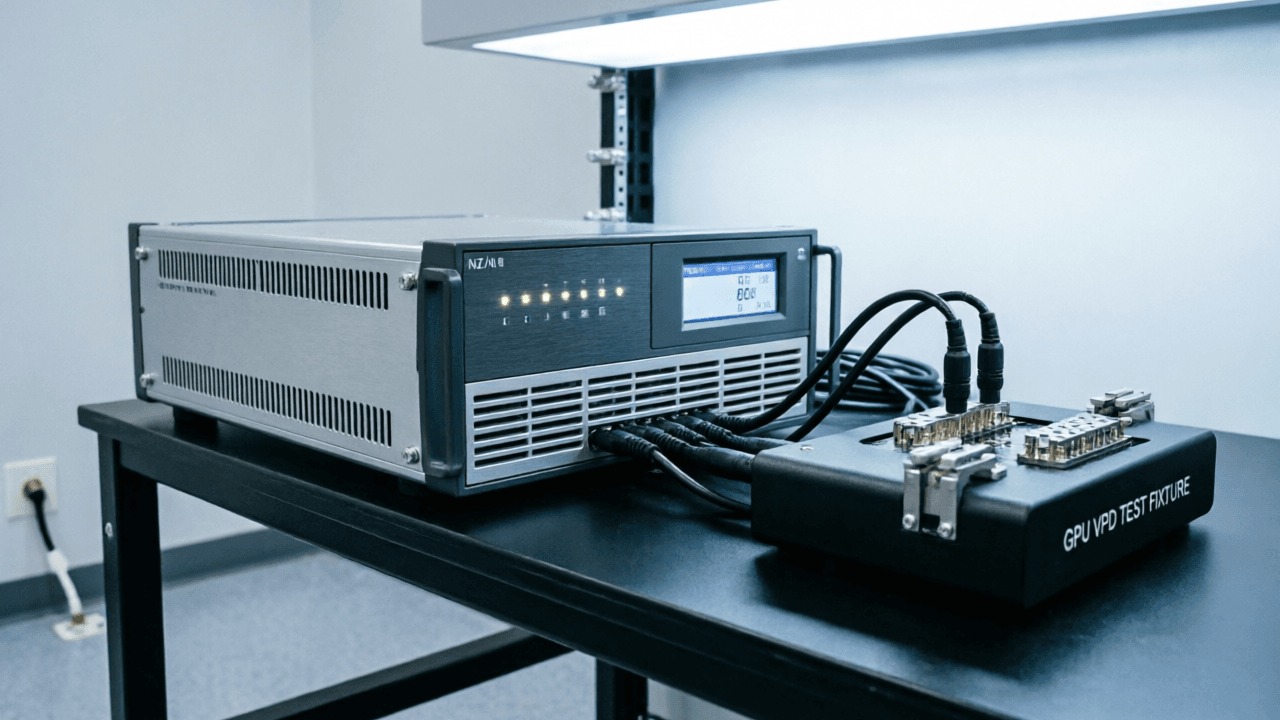
The Role of a GPIB to RS232 Converter ATE Integration Strategy
When upgrading an ATE system, moving to a modern serial communication architecture like RS232 provides a straightforward path to integrating contemporary host computers. Modern PCs can easily interface with RS232 hardware, allowing test managers to replace aging, proprietary host machines with off-the-shelf industrial computers. To make this transition work seamlessly, the system requires a robust protocol bridge.
Integrating a GPIB to RS232 converter ATE architecture allows the modern host computer to send standard serial commands that are then translated into the appropriate IEEE 488.1 or IEEE 488.2 format required by the legacy instruments. This approach means test engineers can retain their existing oscilloscopes, digital multimeters, and signal generators while completely modernizing the control hardware and user interface. The FT7130 GPIB-RS232 Converter serves as this critical bridge, ensuring that legacy instrumentation remains a viable, productive asset within a modernized test rack.
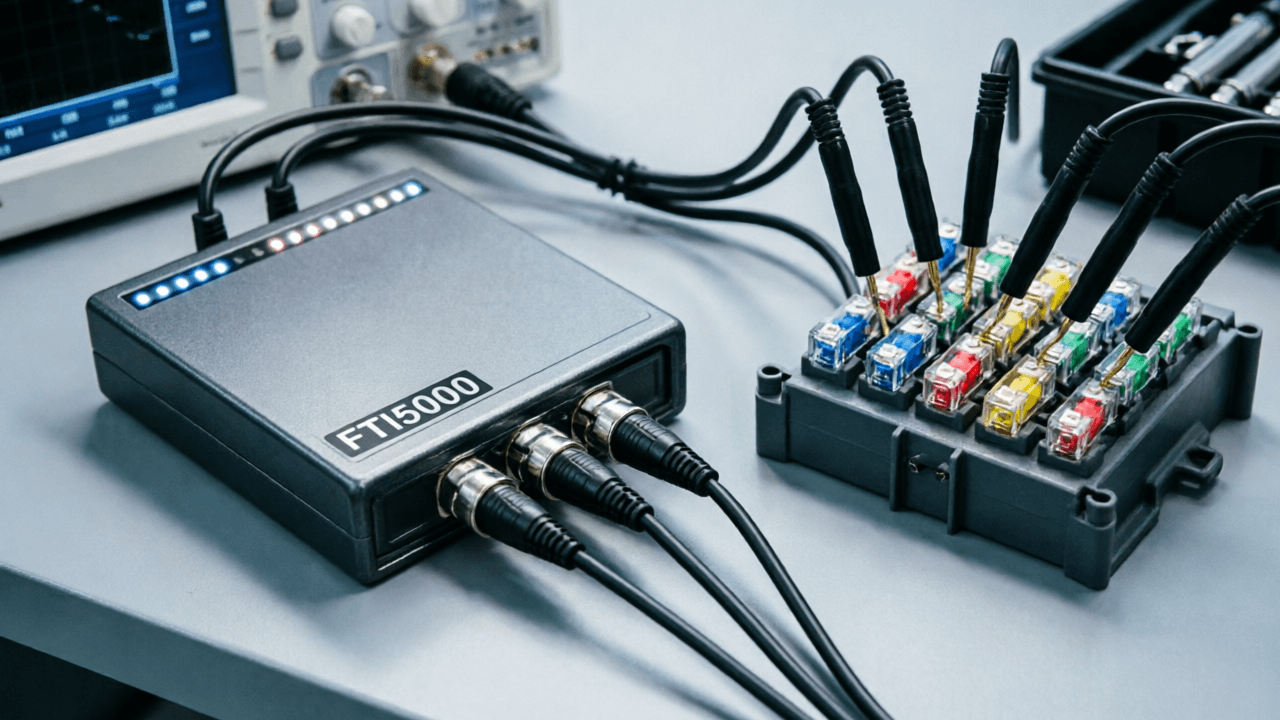
Key Features of the FT7130 for Upgrade Paths
Building a reliable upgrade path requires hardware that is not only functional but also easy to deploy and maintain. The FT7130 is designed specifically to facilitate this kind of industrial integration. It is fully compatible with both IEEE 488.1 and IEEE 488.2 standards, ensuring comprehensive support for the vast majority of legacy GPIB instruments currently in service.
Furthermore, the converter features configurable RS232 interface parameters. This flexibility is crucial when integrating into diverse ATE environments, as it allows the converter to communicate with a wide range of instruments equipped with standard serial interfaces. The unit is designed for simple configuration and easy operation, minimizing the learning curve for test technicians. To assist with system diagnostics and uptime, the FT7130 includes two status indicator LEDs that clearly display the converter’s operating status at a glance. Housed in a compact enclosure measuring just 90 × 60 × 23 mm, the converter can be easily mounted into existing test racks without requiring significant physical restructuring.

Steps to Implement the FT7130 in Your ATE System
Implementing the FT7130 into a legacy ATE upgrade path requires a systematic approach to ensure continuous operation and accurate data translation.
1. Assess Instrument Compatibility
Before deployment, document all GPIB instruments within the ATE system. Verify that their communication protocols align with the IEEE 488.1 or IEEE 488.2 standards supported by the FT7130. This step ensures that the converter can accurately translate commands from the new RS232 host to the legacy instruments.
2. Configure RS232 Parameters
Using the configurable RS232 interface parameters on the FT7130, match the baud rate, parity, and stop bits to the requirements of your new host computer system. Proper configuration is essential to prevent data packet loss or communication timeouts between the serial host and the converter.
3. Integrate and Monitor
Mount the compact FT7130 unit within the test rack and connect the GPIB cable to your instrument cluster and the RS232 cable to the host computer. During initial testing, utilize the two status indicator LEDs to monitor the operating status. These LEDs provide immediate visual confirmation of active communication, allowing engineers to quickly verify that the serial-to-GPIB bridge is functioning correctly.
Securing the Future of Your Test Systems
Modernizing an ATE system does not have to mean a wholesale replacement of proven instrumentation. By strategically implementing the FT7130 GPIB-RS232 Converter, test engineering teams can build a practical, sustainable upgrade path. This approach extends the lifecycle of valuable legacy IEEE 488.1/488.2 instruments, reduces capital expenditure, and allows for the integration of modern, maintainable host computers. Bridging the technological gap ensures that industrial testing operations remain efficient, reliable, and cost-effective for years to come.