
FaithTech
FaithTech designs and manufactures programmable DC power supplies and electronic loads for energy, industrial, automotive, electronics, and aerospace applications.
Copyright © 2026 FaithTech
FaithTech designs and manufactures programmable DC power supplies and electronic loads for energy, industrial, automotive, electronics, and aerospace applications.
Copyright © 2026 FaithTech

The FTDM Series modular bidirectional test dc power source is engineered for high-fidelity emulation of energy storage systems and DC interfaces in microgrid applications. To perform a comprehensive microgrid inverter regenerative test, engineers must replicate dynamic interactions between the inverter, grid, and battery — including seamless transitions between grid-tied and islanded modes. This requires precise time-synchronized control across multiple devices: at minimum, one or more FTDM units (to emulate battery or PV DC sources), a grid simulator (e.g., AC voltage/frequency reference), and optionally a secondary FTDM or dedicated battery emulator for multi-source scenarios.
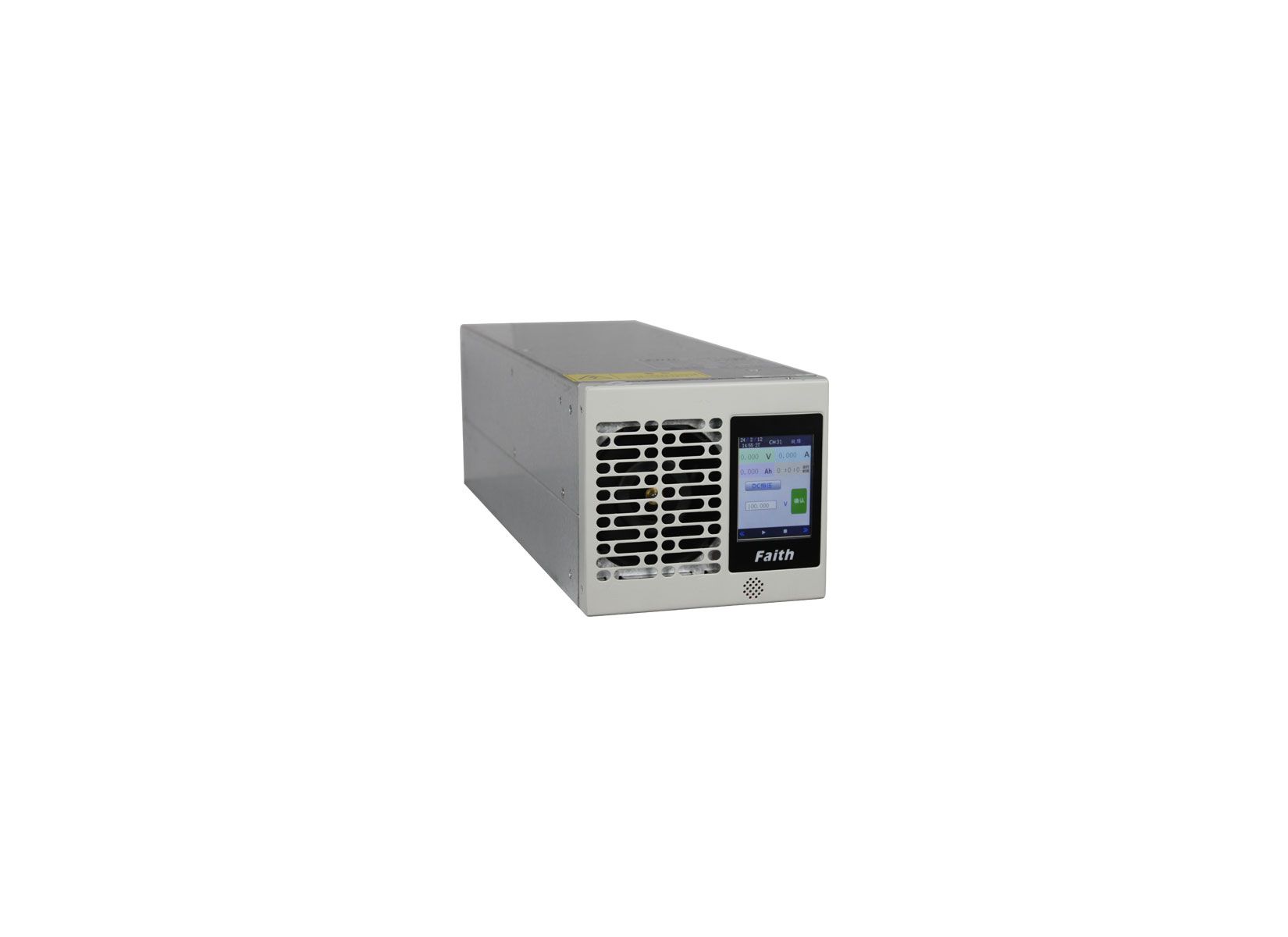
Each FTDM unit supports master-slave synchronization via EtherCAT or IEEE-1588 Precision Time Protocol (PTP), enabling sub-millisecond phase alignment across power stages. When configured as a master, a single FTDM can coordinate voltage ramp rates, current limits, and state-change triggers for all synchronized slaves — critical for reproducing transient events such as utility fault clearing or scheduled islanding. The modular architecture allows scaling from single-unit lab validation up to multi-MW system-level tests, supporting voltage ranges up to 2250 V and current up to ±4500 A per cabinet, with total system capacity scalable to 3 MW.
A core requirement in microgrid inverter certification is validating stable operation during unplanned or intentional islanding. Using the FTDM Series in regenerative mode, testers configure one unit as a controllable DC source (emulating battery discharge) while another operates as a regenerative load (absorbing excess inverter output during over-generation). During transition sequences, the FTDM units respond to real-time commands from the grid simulator — for example, dropping AC voltage to zero within 2 cycles to initiate anti-islanding detection logic.
Simultaneously, the FTDM units adjust their DC bus voltage setpoints and droop characteristics to mirror actual battery response curves. Because the FTDM Series supports both sourcing and sinking power in a single unit — without external resistive loads — it eliminates energy waste and thermal management bottlenecks common in non-regenerative setups. This capability is essential for long-duration islanding validation where inverters must sustain local loads for minutes or hours without grid support.
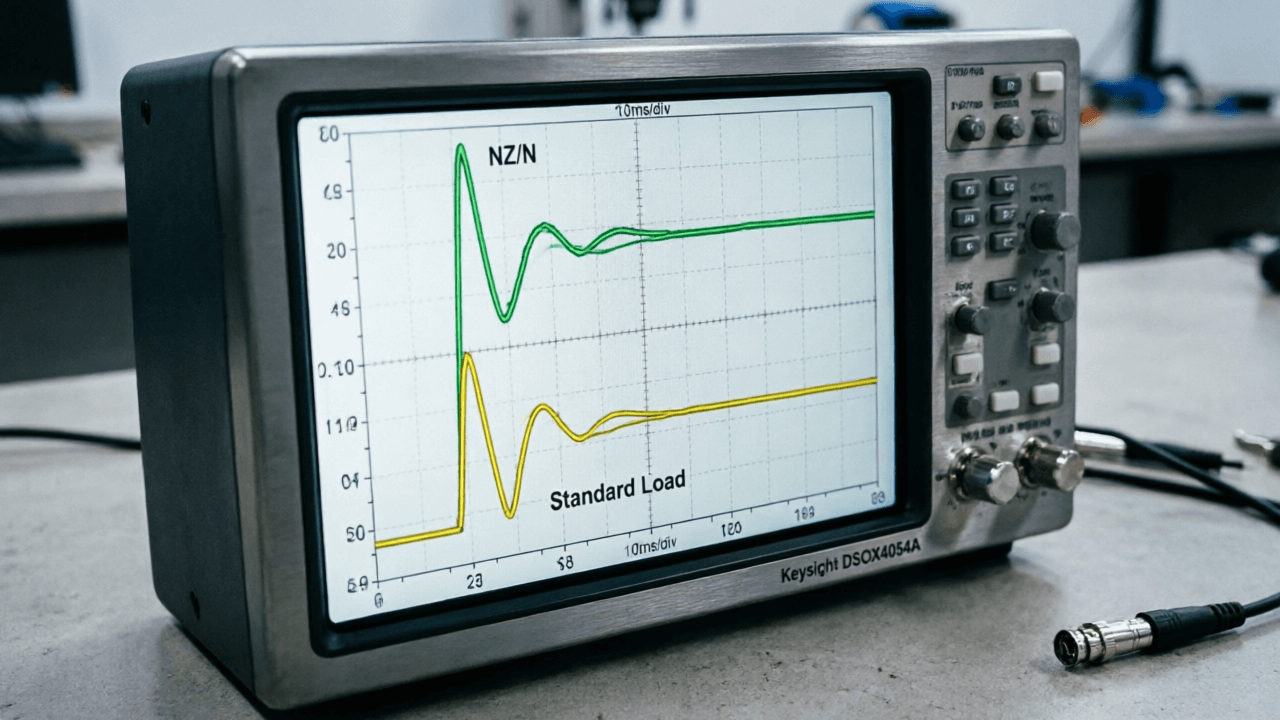
For development teams building energy storage converters (PCS) or microgrid equipment, this level of controllability enables iterative design validation against IEEE 1547-2018 and UL 1741 SB requirements — particularly Sections 6.3 (anti-islanding) and 7.2 (reactive power support).
Microgrid inverters must provide reactive power (Q) support to maintain local voltage stability — especially during weak-grid or islanded conditions. While reactive power is inherently an AC-domain function, its DC-side impact manifests as rapid, low-amplitude current modulation on the inverter’s DC input. The FTDM Series delivers the required bandwidth (up to 20 kHz current control loop) and resolution (<0.1% FS) to emulate these subtle but critical interactions.
To test Q-support algorithms, engineers configure the FTDM to apply programmable AC-coupled current ripple superimposed on a steady DC bias — replicating the harmonic-rich loading profile seen when inverters inject or absorb VARs. This is coordinated with the grid simulator’s voltage-phase-angle shifts to verify closed-loop response fidelity. Because the FTDM operates regeneratively, these modulated loads return energy to the facility grid rather than dissipating it as heat — reducing test facility OPEX and enabling continuous duty-cycle validation.
This capability is detailed in the Bidirectional DC Power Supplies Solutions offering, which highlights scalability, regenerative efficiency, and support for next-generation power system testing.
Anti-islanding protection remains one of the most stringent functional safety checks for grid-interactive inverters. The FTDM Series enables repeatable, deterministic validation by integrating with grid simulators that generate standardized islanding detection test waveforms — such as passive methods (voltage/frequency shift, impedance changes) and active methods (frequency drift, harmonic injection).
In practice, engineers configure one FTDM unit to emulate the DC source (e.g., battery at 800 V, 500 A), while a second FTDM — operating in regenerative sink mode — dynamically adjusts its effective load impedance to simulate changing local load profiles. Simultaneously, the grid simulator executes pre-programmed voltage sags, frequency excursions, or harmonic distortions. All devices remain time-synchronized, ensuring that the inverter under test experiences precisely correlated AC and DC disturbances — matching real-world edge cases like partial blackouts or distributed generation tripping.
This end-to-end scenario-based approach is supported by the FTDM Series modular bidirectional test dc power source platform, purpose-built for energy storage converter (PCS), microgrid equipment production and development, and power battery testing. Its bidirectional, modular, and regenerative architecture makes it uniquely suited for the evolving demands of microgrid inverter regenerative test.