
Understanding Automotive Electronics Test Requirements
Automotive electronics testing demands precision, reliability, and dynamic responsiveness far beyond standard lab applications. Modern ECUs, ADAS sensors, battery management systems (BMS), onboard chargers (OBC), and motor drive modules must operate across extreme voltage transients, cold-crank conditions, load-dump surges, and network-induced ripple — all while maintaining functional safety compliance. A generic bench power supply cannot replicate these real-world electrical environments. Instead, test engineers must match supply capabilities to specific validation objectives: functional verification, stress testing, ISO 16750-2 compliance, or full vehicle power net simulation.
Bench vs. Wide-Range vs. High-Voltage vs. Network-Simulating Supplies
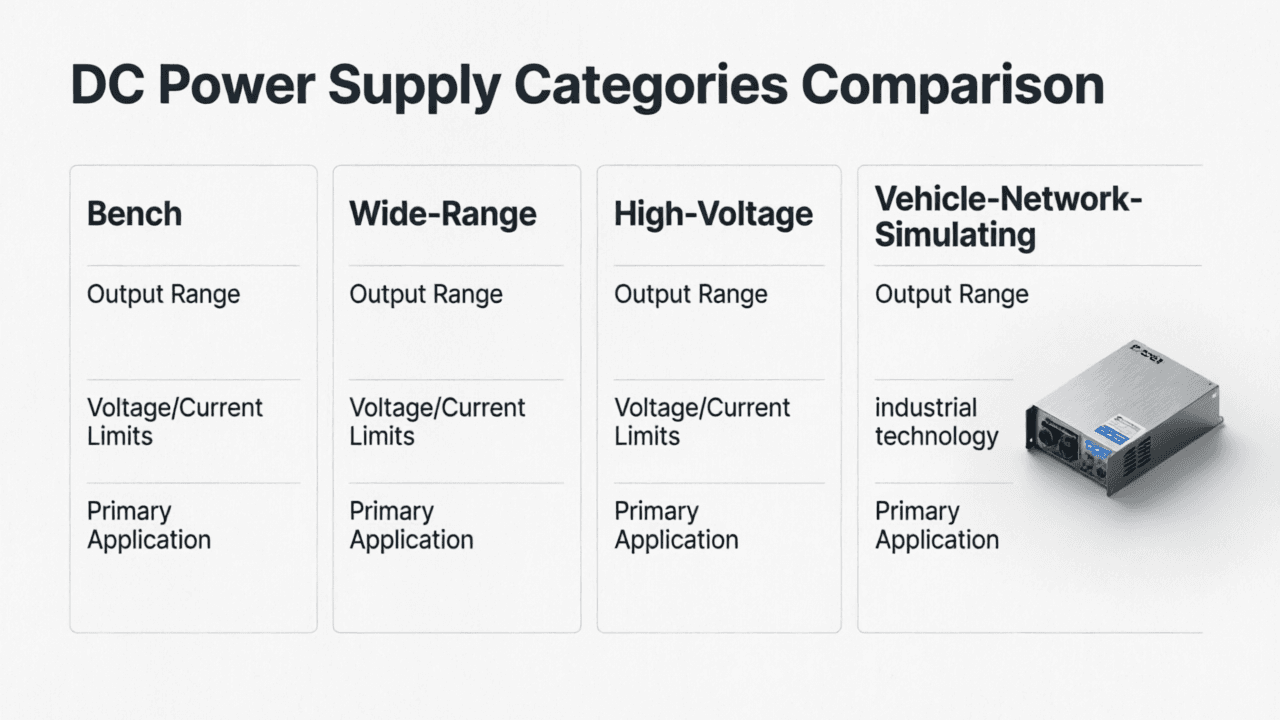
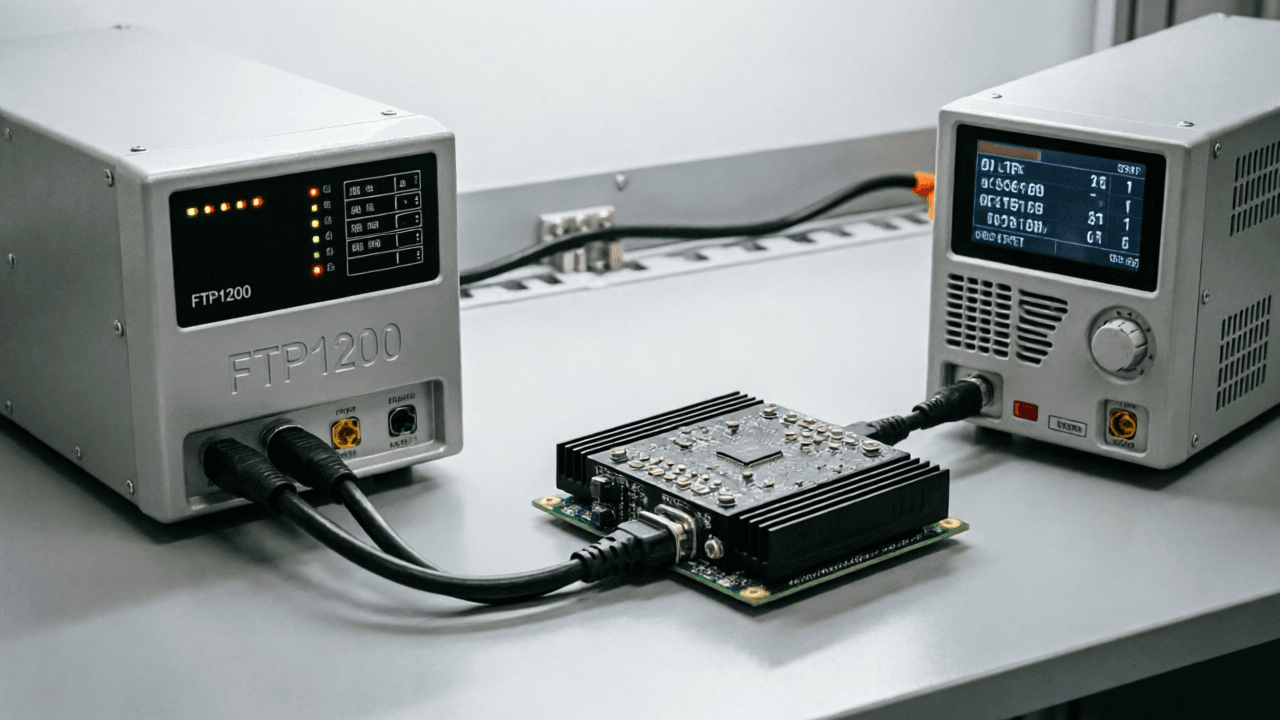
Bench Programmable DC Power Supplies, such as the FTP1200 Series Programmable DC Power Supply, offer excellent baseline control for component-level tests. With output ranges up to 3000 V and 120 A, they support high-voltage subsystems like EV traction inverters or 800 V battery architectures. Their features — including slope control, sequence editing, analog programming, and comprehensive protection (OVP, OCP, OPP, OTP) — enable precise voltage ramping and transient emulation. However, they lack native vehicle-network waveform generation.
Wide-Range Supplies deliver extended voltage/current flexibility in a single unit (e.g., 0–3000 V / 0–120 A), ideal for multi-platform testing — from 12 V body electronics to 400–800 V BEV powertrains. Their compact 1U or 19" form factor simplifies integration into automated test equipment (ATE) racks, and optional cascade functionality allows parallel operation without complex synchronization logic.
High-Voltage Supplies, while overlapping with wide-range models, emphasize ultra-stable regulation above 1000 V — critical for testing insulation integrity, gate drivers, and SiC/GaN-based motor controllers. The FTP1200 Series supports remote voltage compensation and high-precision measurement, ensuring accuracy under long cable runs common in HV test benches.
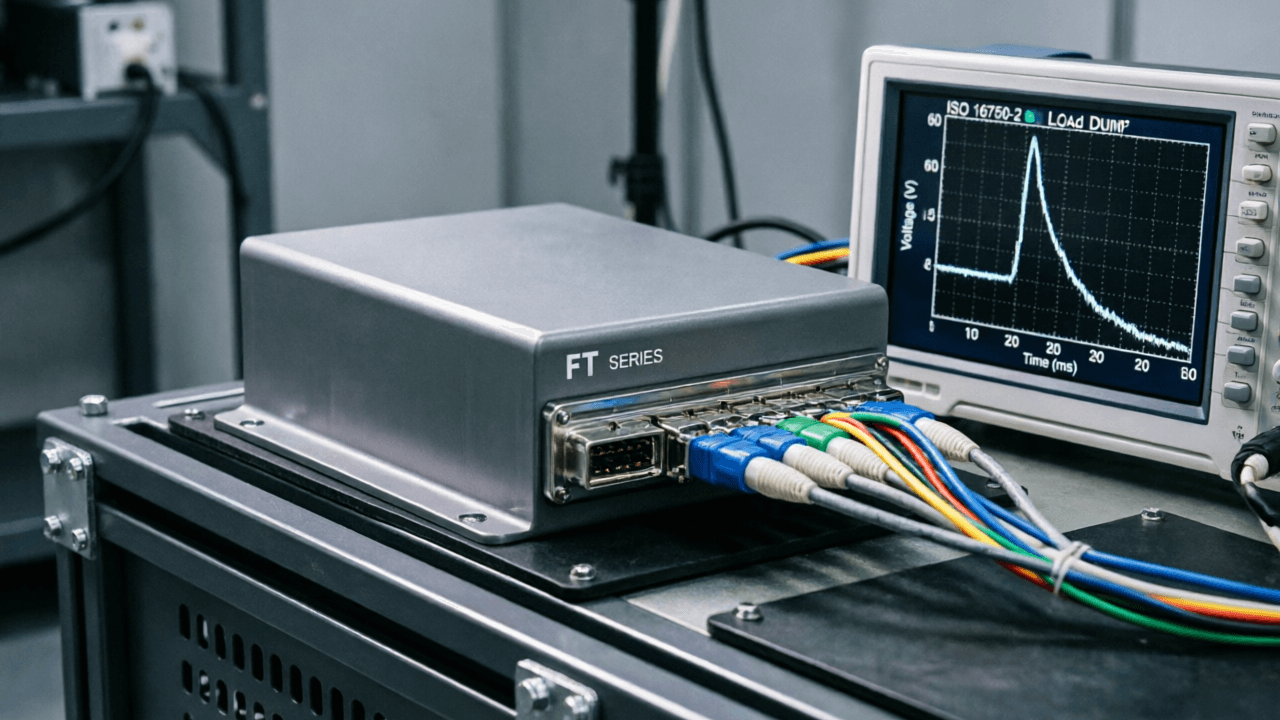
Vehicle-Network-Simulating Supplies, like the FT series automotive power supply waveform analog test power supply, are purpose-built for ISO 16750-2 and LV 124 compliance. They generate standardized transients (e.g., cranking dips, jump-start spikes, load dump pulses) and simulate CAN/LIN bus-induced ripple — enabling realistic power net behavior during ECU boot, sleep/wake transitions, and fault injection. Unlike general-purpose supplies, they embed waveform libraries and analog modulation interfaces for seamless integration with automotive ATE.
Matching Supply Type to Test Application
-
ECU Functional & Diagnostics Testing: Prioritize low-noise, fast-response bench or wide-range supplies with analog monitoring and digital I/O for stimulus/response automation. The FTP1200 Series’ composite signal port and external control interface simplify trigger-based test sequencing.
-
Sensor & Actuator Validation: Require stable, low-ripple outputs with millivolt-level resolution. Wide-range units with high-precision voltage/current measurement and remote sense capability ensure accurate biasing of Hall-effect sensors, current shunts, or piezoelectric actuators.
-
High-Voltage Module Stress Testing (OBC, BMS, Inverters): Demand high-voltage range, robust overvoltage protection, and thermal stability. The FTP1200 Series’ 3000 V max output and 1800 W power rating suit long-duration soak tests at elevated voltages.
-
Full Vehicle Power Net Simulation: Mandate dedicated waveform generation. The FT series automotive power supply waveform analog test power supply is engineered specifically for Vehicle Power Net Simulation Test, supporting pre-loaded ISO, DIN, and OEM-specific profiles without external software scripting.
Building a Scalable Automotive Test Environment
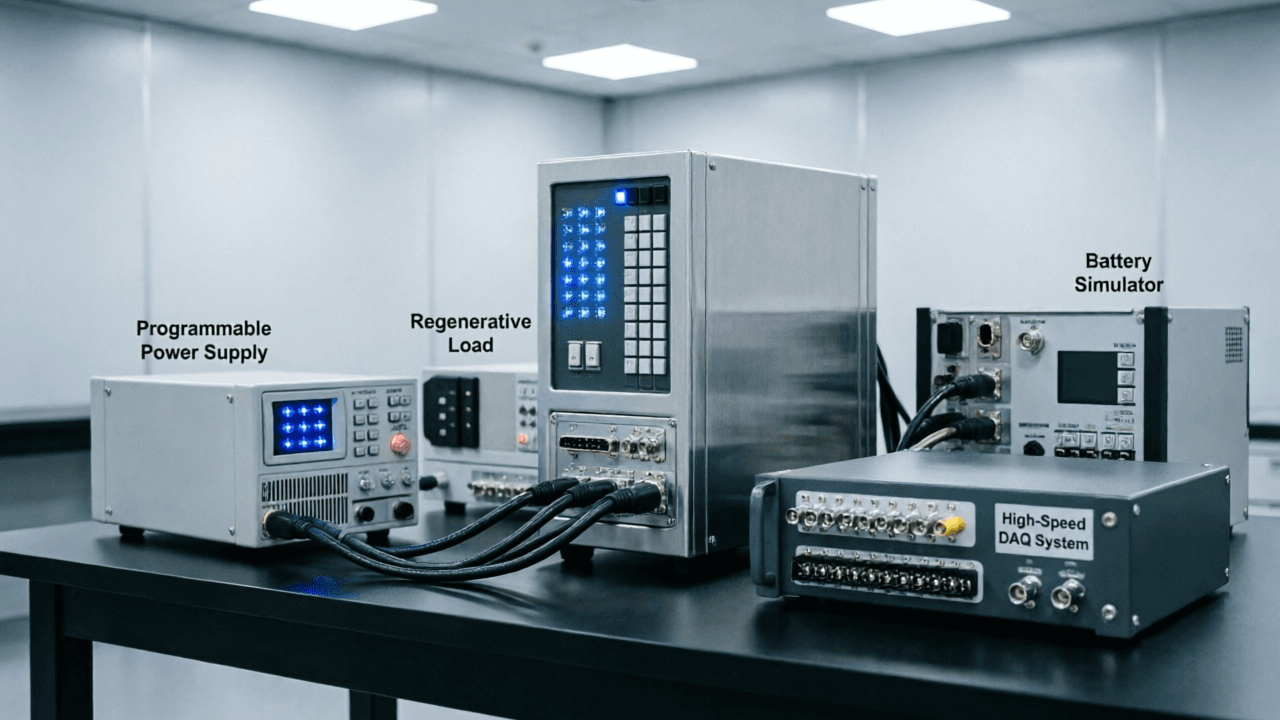
A holistic approach integrates programmable power with complementary assets. The Automotive Electronics ATE Solution demonstrates how programmable DC supplies — whether wide-range, high-voltage, or network-simulating — combine with regenerative loads, battery simulators, and data acquisition to recreate full electrical environments for new energy vehicle components. Traceable reports, automation APIs, and synchronized multi-instrument control ensure repeatability and compliance documentation.
Selecting the right automotive electronics DC power supply selection starts with defining the test scope: Is it static functional validation, dynamic transient immunity, or full-system power net emulation? Bench supplies offer versatility; wide-range models improve platform coverage; high-voltage units address next-gen architectures; and vehicle-network-simulating supplies deliver standards-compliant realism. When combined within a unified ATE framework, each type contributes to faster validation cycles, higher confidence in field performance, and accelerated time-to-certification.