
FaithTech
FaithTech entwickelt und fertigt programmierbare Gleichstrom-Stromversorgungen und elektronische Lasten für Anwendungen in den Bereichen Energie, Industrie, Automobil, Elektronik und Luft- und Raumfahrt.
Urheberrecht © 2026 FaithTech
FaithTech entwickelt und fertigt programmierbare Gleichstrom-Stromversorgungen und elektronische Lasten für Anwendungen in den Bereichen Energie, Industrie, Automobil, Elektronik und Luft- und Raumfahrt.
Urheberrecht © 2026 FaithTech

Uninterruptible Power Supplies (UPS) and backup generators are critical infrastructure components designed to deliver stable power during outages. To ensure reliability, manufacturers subject these systems to rigorous aging and durability tests. These tests simulate extended operational cycles, demanding sustained, stable electrical loads to verify long-term performance and thermal management.
When designing an aging test setup, engineers face a critical equipment choice: utilizing a standard programmable AC source or deploying a dedicated ac regenerative electronic load. While both can be utilized to test power systems, their operational mechanisms, energy consumption, and specific use cases differ significantly. Selecting the correct instrument ensures test accuracy while optimizing operational costs.
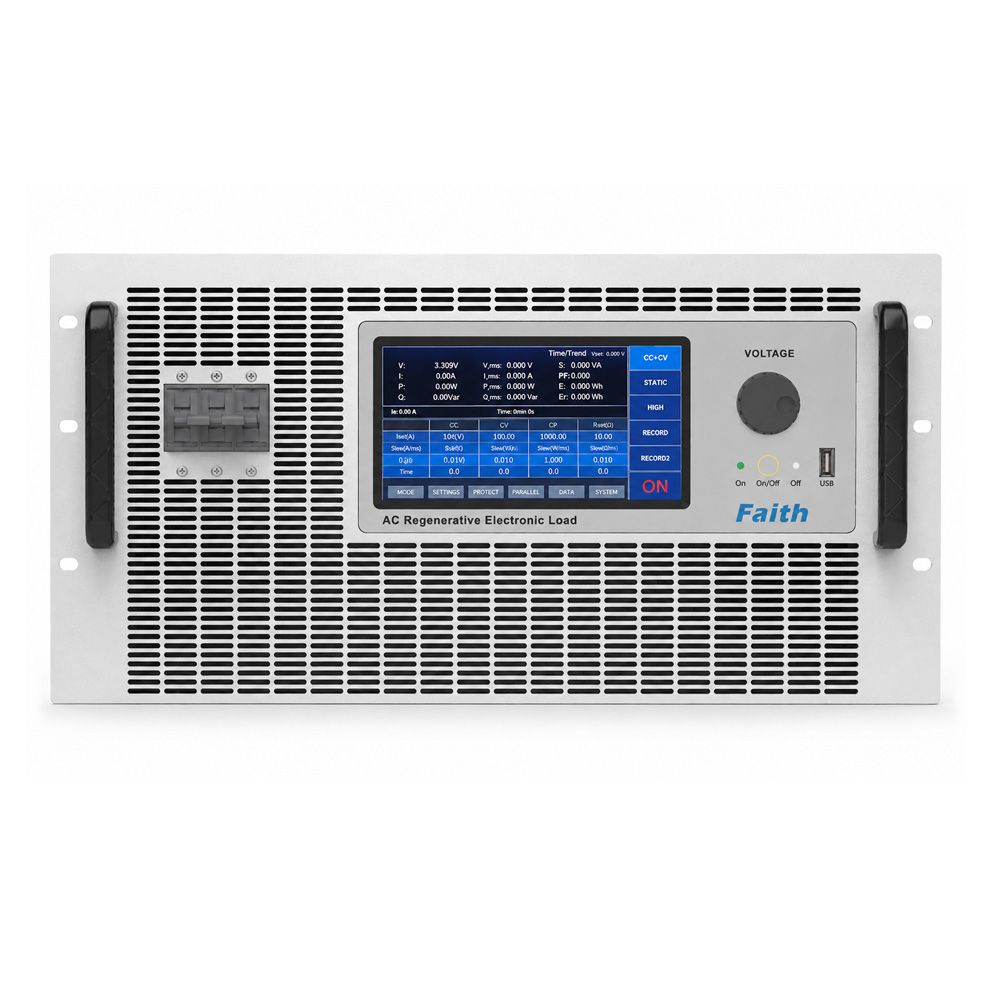
A standard programmable AC power supply is primarily designed to simulate grid power and provide clean, stable AC voltage to a device under test (DUT). In the context of aging tests, a standard AC source is typically used to provide the input power to the UPS or generator system. It simulates various grid conditions, allowing engineers to observe how the UPS handles input anomalies, voltage dips, and frequency variations over time.
However, standard AC sources are unidirectional. They can provide power but cannot sink it. During a UPS or generator aging test, the system must be loaded to simulate real-world electrical demand. If using a standard AC source for the input, engineers must pair it with passive or non-regenerative load banks to absorb the output power. This traditional approach generates massive amounts of heat, requiring substantial facility cooling and resulting in high energy waste.

For applications requiring long-term stable AC power input, such as aging rooms and production lines, the FTPS Series Programmable Bidirectional AC power supply Regenerative grid simulator offers a robust solution. It supports various fields, from home appliance durability experiments to communication power supply testing and aerospace avionics power provision.
For the specific task of loading the output of a UPS or generator during aging tests, an AC regenerative electronic load provides a highly efficient alternative to traditional load banks. Instead of converting electrical energy into heat (which is then expelled into the testing facility), a regenerative electronic load sinks the AC power, converts it back to DC, and synchronizes it with the local grid. This process feeds the energy back into the facility's power network.
This capability is particularly valuable for aging tests, which often run continuously for hours or days. By recovering the energy consumed during the test, facilities drastically reduce their net power consumption. Furthermore, because the load does not dissipate energy as heat, the burden on the facility's HVAC and cooling systems is significantly reduced. This creates a safer, more manageable testing environment.
The FT6500R series AC Regenerative Electronic Load is explicitly engineered for these demanding applications. It is purpose-built for UPS aging, generator aging, and AC power supply aging. By utilizing specialized hardware designed specifically to sink and recover AC power, the FT6500R series ensures that the durability testing process is both technically rigorous and operationally sustainable.
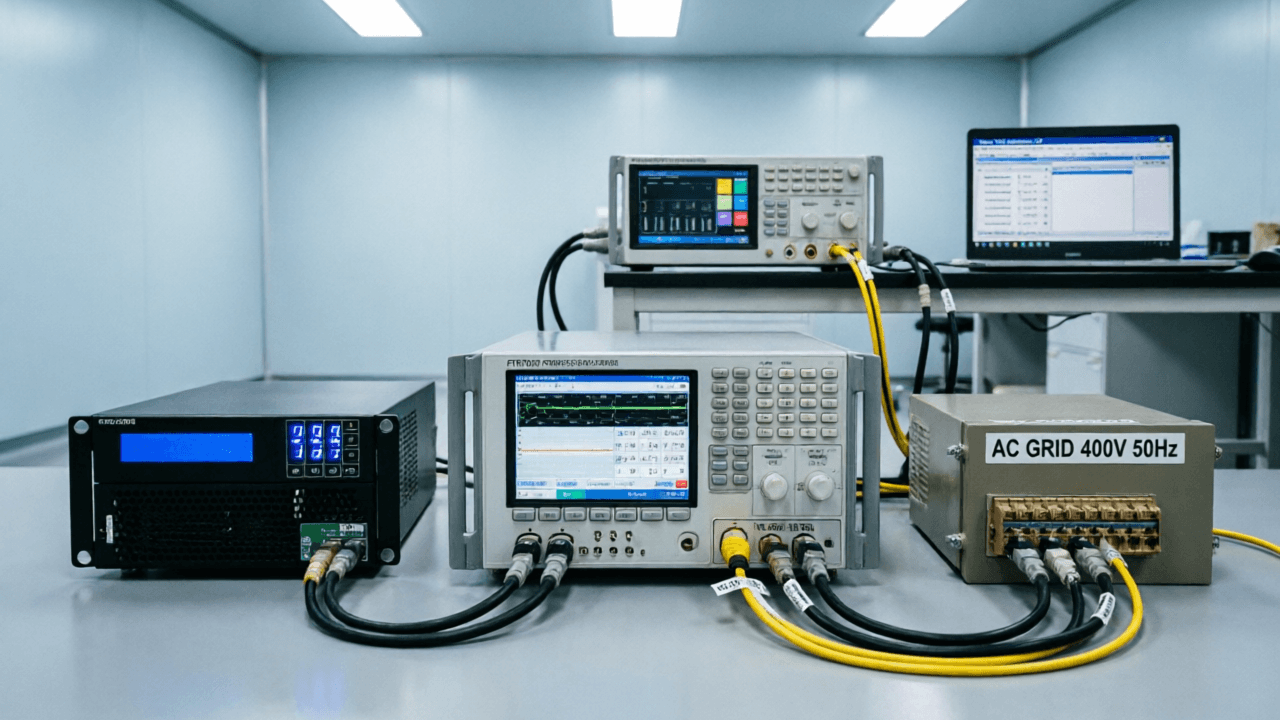
The decision between a standard AC source and an AC regenerative electronic load ultimately comes down to the specific phase and goal of the aging test.
In many advanced testing scenarios, both types of equipment are used in tandem. A programmable AC source provides the input, while a regenerative load absorbs the output. However, for the specific, energy-intensive process of UPS and generator aging, the regenerative load provides the most distinct operational advantages, ensuring reliable durability validation without excessive energy waste.